Phone:
(877)-898-5303
Physical address:
One Glenlake Parkway Suite 650 &, 700, Atlanta, Georgia 30328

Phone:
(877)-898-5303
Physical address:
One Glenlake Parkway Suite 650 &, 700, Atlanta, Georgia 30328
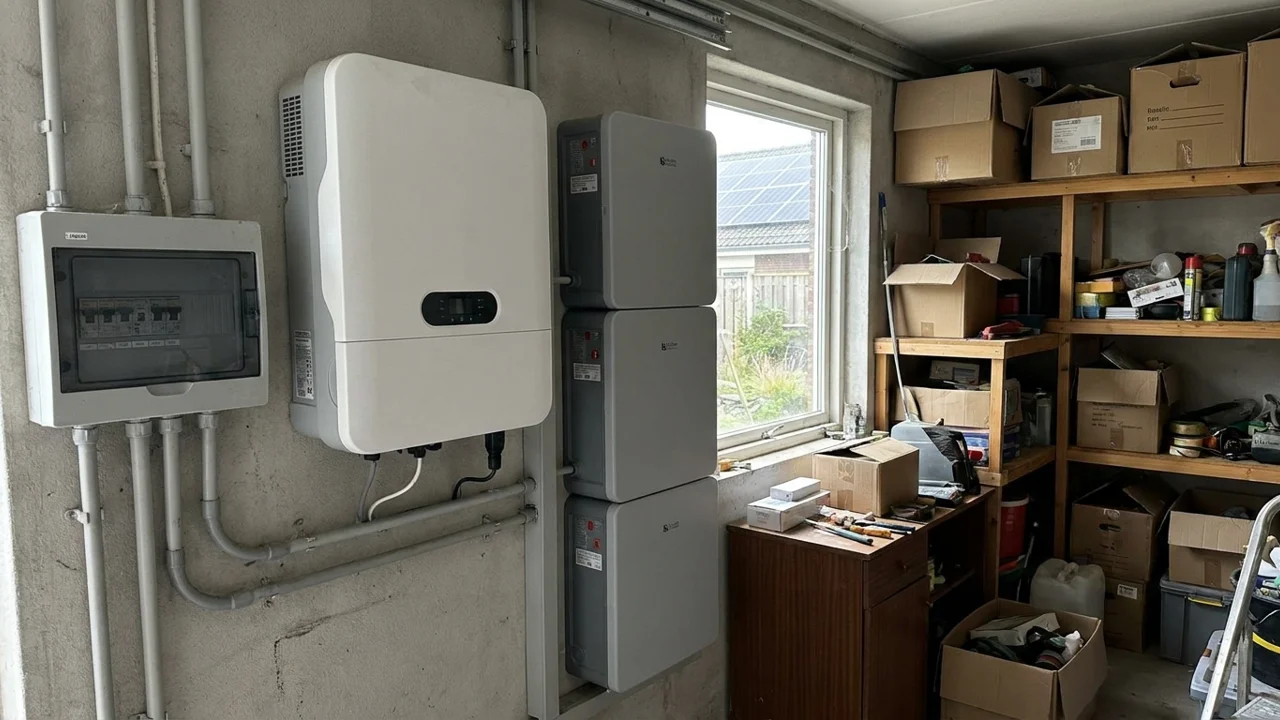
Going solar involves two big choices: how your system connects to the grid, and which battery, if any, stores the energy. They are linked. A grid-tied system without a battery behaves very differently from a hybrid or off-grid system, and the right battery chemistry depends on how you plan to use the stored power.
A1 SolarStore has two guides that make the decision easier: one on solar batteries and one on the difference between on-grid, off-grid and hybrid solar systems. This article puts them together and adds a simple sizing example.
Key takeaways
| System type | How it works | Best for | Main limitation |
|---|---|---|---|
| On-grid (grid-tied) | Connects to the utility and exports excess power | Lowest cost and highest savings where net metering is good | Usually shuts down during an outage |
| Hybrid | Grid-connected with a battery and a hybrid or battery inverter | Backup power plus bill savings | Higher cost; needs a compatible inverter and battery |
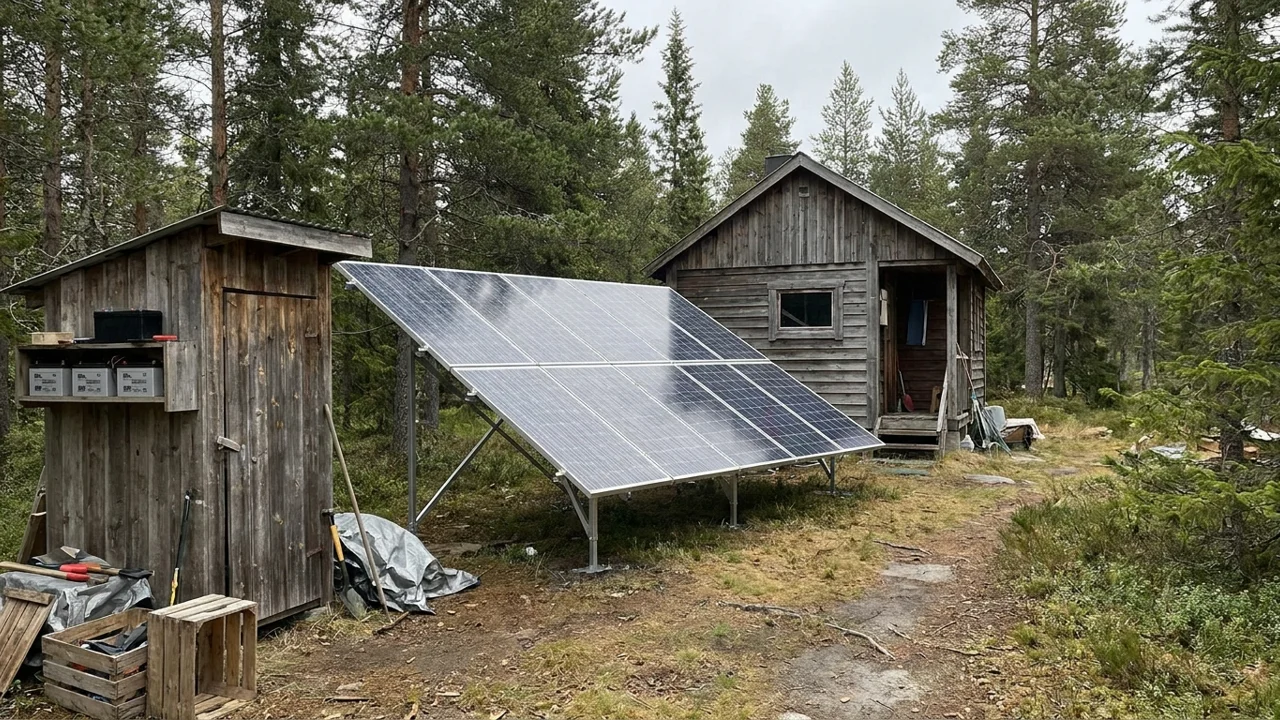
| Off-grid | No utility connection; solar plus battery (and often a generator) | Remote cabins, farms and full energy independence | Must be sized for the worst days; highest battery cost |
Searches for “on grid vs off grid solar” and “hybrid solar system” usually come from the same question: can I keep my power on when the grid fails, and what will it cost? A hybrid system answers yes at moderate cost. Off-grid answers yes everywhere, but you must size and maintain the whole system yourself.
| Battery type | Strengths | Trade-offs | Typical use |
|---|---|---|---|
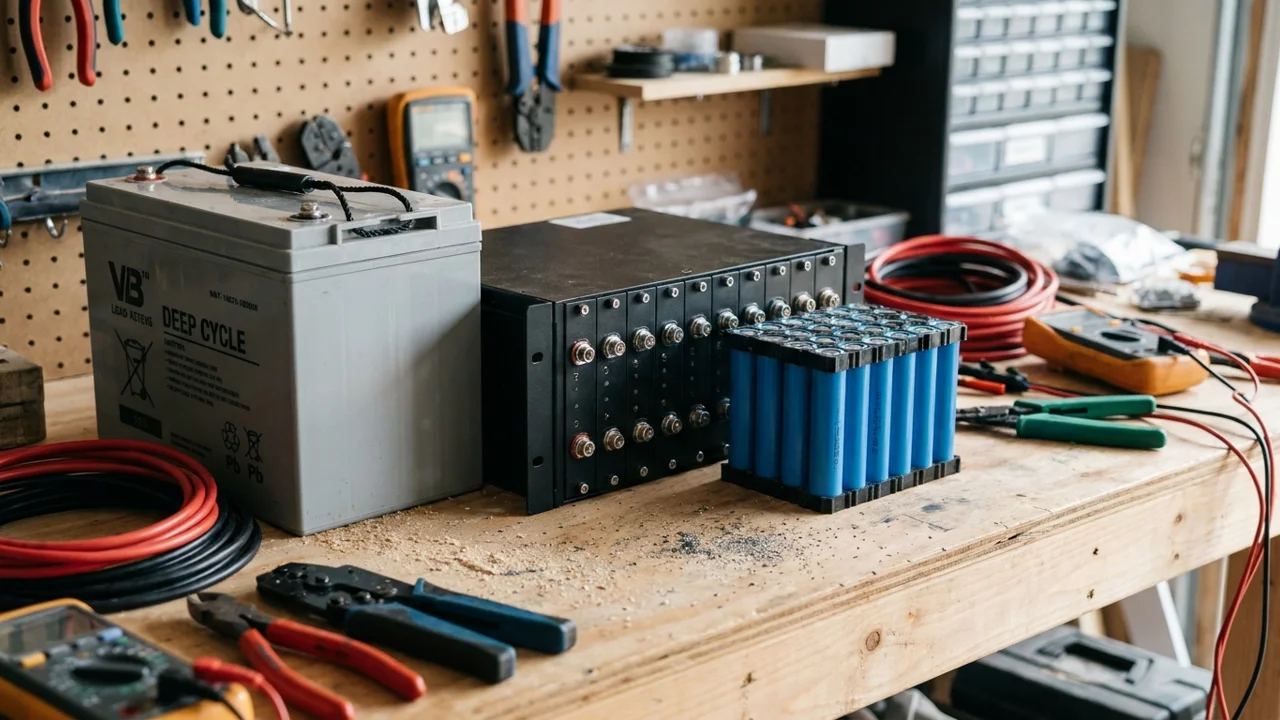
| Lead-acid (flooded and AGM) | Low upfront cost, proven technology | Shorter life, lower usable depth of discharge, maintenance for flooded types | Budget backup, small off-grid systems |
| Lithium-ion (including LiFePO4) | High efficiency, compact, long cycle life, deep discharge | Higher upfront cost; needs an inverter that is compatible with the battery and its built-in battery management system | Home backup, daily cycling, most modern systems |
| Flow batteries | Long life, can discharge deeply, scalable capacity | Large footprint, fewer residential products | Large or long-duration storage |
| Nickel-cadmium | Durable in extreme temperatures | Cost and environmental handling | Specialized industrial uses |
When people search for the “best battery for solar panels,” the honest answer is: it depends on how often you cycle it and for how long you need backup. For daily cycling and a compact install, lithium iron phosphate (LiFePO4) is the common choice. For occasional backup on a tight budget, lead-acid may be enough. Browse the deep cycle batteries range for current options.
A simple method works for a first estimate:
For example, a refrigerator, lights, internet and a few outlets might draw about 500 watts on average. For 10 hours of backup you need about 5 kWh. If the battery’s usable capacity is around 90 percent of its rating, you would look for roughly 5.5 kWh of nominal capacity. A lead-acid battery that should only be discharged to about 50 percent would need about 10 kWh of nominal capacity for the same usable energy.
Also check the continuous power rating (can it run your loads at the same time?) and the surge rating for motors such as well pumps and air conditioners.
A hybrid inverter manages the solar input, the battery and the grid. A standard grid-tied string inverter or microinverter shuts down during an outage; only special configurations, such as microinverters with a backup controller, can supply limited daytime power without a battery. If you may add a battery later, ask your installer for a battery-ready or AC-coupled design. The power inverters range lists microinverters, string, grid-tie and hybrid inverters. The DOE overview of inverters and grid services explains why grid-tied inverters shut down during outages.
Together, these guides show that solar does not have to be complicated. Match the system architecture to the battery technology and the way you use power, and you can build a setup that is efficient, affordable and built to last. Explore more at the A1 SolarStore blog.
On-grid systems connect to the utility and usually shut down in an outage. Off-grid systems have no utility connection and rely on solar and batteries. Hybrid systems connect to the grid and also have battery backup.
For most modern homes lithium iron phosphate (LiFePO4) is the common choice because it is compact, efficient and has a long cycle life. Lead-acid costs less upfront but needs more capacity and maintenance.
The main types are lead-acid, lithium-ion, flow and nickel-cadmium batteries. They differ in cost, lifespan, size and maintenance.
Add up the watts of the loads you want to back up, multiply by the hours of backup, divide by 1,000 for kWh, and divide by the battery’s usable depth of discharge.
Often yes, but it depends on the inverter. Ask your installer about AC-coupled or hybrid-compatible options.