Phone:
(877)-898-5303
Physical address:
One Glenlake Parkway Suite 650 &, 700, Atlanta, Georgia 30328

Phone:
(877)-898-5303
Physical address:
One Glenlake Parkway Suite 650 &, 700, Atlanta, Georgia 30328
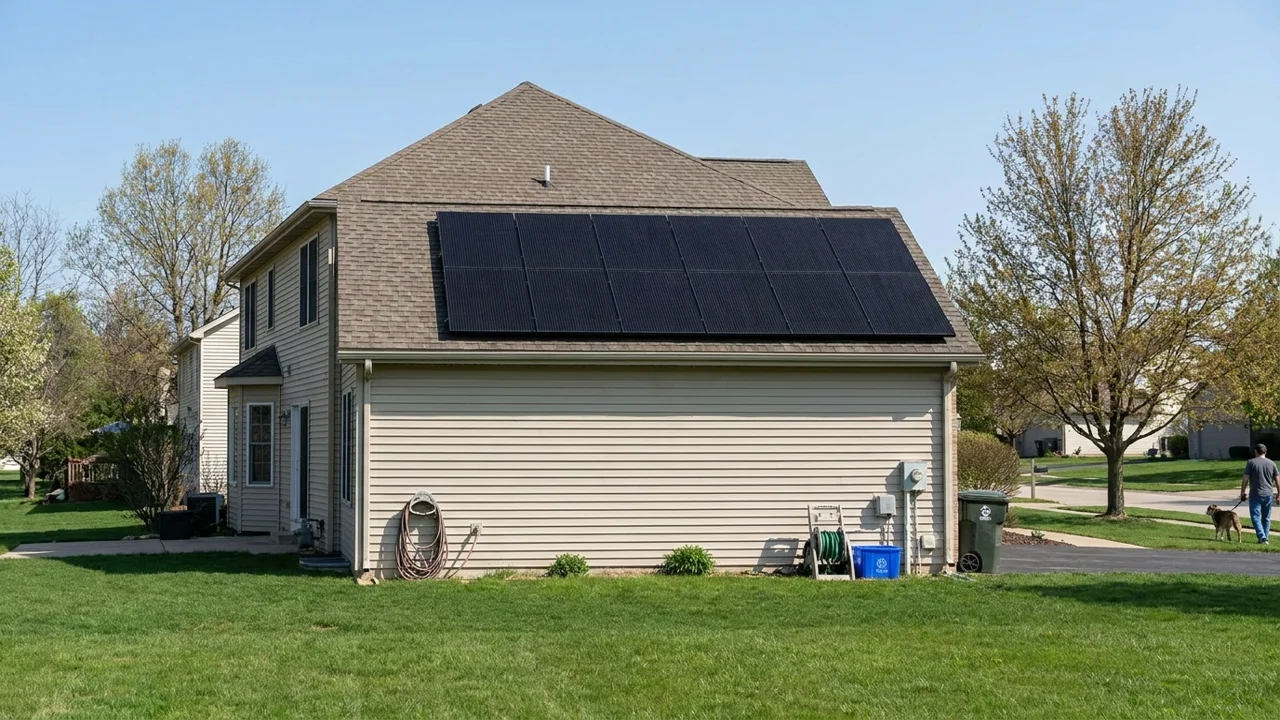
How many solar panels do I need? Divide your yearly electricity use by what one kilowatt of panels produces at your location, then divide the result by the wattage of the panel you plan to buy. With a 400 W panel, an average US home that buys about 10,360 kWh a year needs roughly 18 panels (about 7.2 kW) at 5 peak sun hours and about 23 panels at 4 peak sun hours. That is very close to the typical home solar system size of 7.15 kW that NREL uses in its analyses, according to the DOE Homeowner’s Guide to Solar.
Key takeaways
This is how to calculate solar system size by hand, the same logic any solar system size calculator uses.
The derate factor covers real-world losses: dirt (soiling), shading, wiring, panel mismatch, inverter conversion and aging, plus heat on hot days. This guide uses 0.80, meaning a system delivers about 80% of what its nameplate rating times the sun hours would suggest. That matches a July 2024 NREL training presentation for USDA (NREL/PR-7A40-90582), which lists overall losses from array to inverter output of about 20%. The PVWatts V8 documentation treats system losses as a separate input and its default inverter efficiency is 96%, so a detailed model may land a little above or below 0.80.
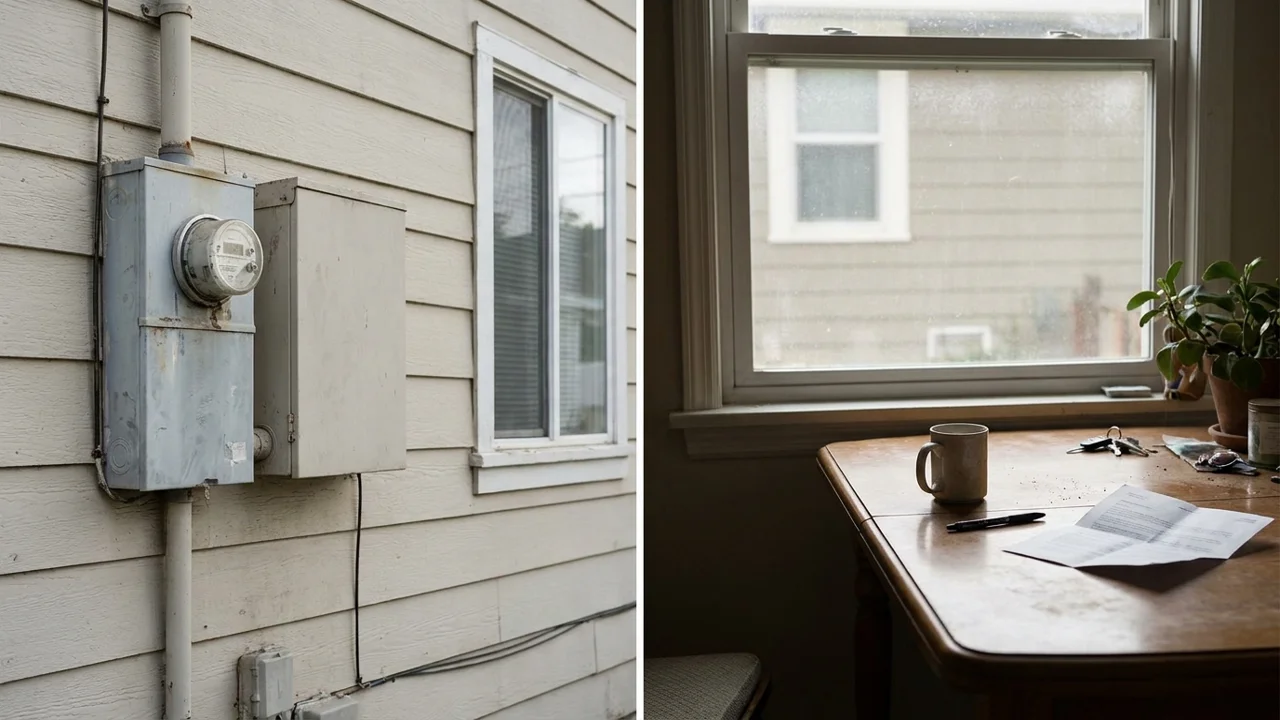
Your utility bill shows kilowatt-hours used each month. Add the last 12 months, because one summer or winter bill can be far off the annual average.
If you do not have the bills yet, use a national benchmark. In the EIA Electric Sales, Revenue, and Average Price tables with data for 2024, the average US residential customer bought 863 kWh per month. Multiplied by 12, that is about 10,360 kWh per year. The state averages range widely, from about 495 kWh a month in Hawaii and 503 in California to about 1,202 in Louisiana in the same table, so your own bills matter more than the national figure.
One caveat from EIA’s own FAQ on home electricity use: these numbers are electricity purchased from the utility, so homes that already have net-metered solar look smaller than they really are.
A peak sun hour is one hour of sunlight at 1,000 watts per square meter. The same NREL presentation notes that a kWh per square meter of sunlight is sometimes called a “sun-hour”, gives about 4.9 kWh/m² per day on a horizontal surface as typical for Colorado, and says horizontal solar resource varies from 3.0 to 6.0 kWh/m² per day over most of the continental US.
Panels that are tilted toward the sun usually receive more than the horizontal value, which is why this guide shows 4, 5 and 5.5 hours as planning scenarios. For your real number, enter your address in PVWatts from NLR (the lab formerly known as NREL). It uses National Solar Radiation Database weather data and reports solar radiation for your tilt and azimuth, which makes it a reliable free “how many solar panels do I need calculator” for a first pass.
Take the 2024 EIA average and a site with 5 peak sun hours:
At 4 peak sun hours, one kW produces 4 × 365 × 0.80 = 1,168 kWh a year. The same home then needs 10,360 ÷ 1,168 = 8.9 kW, or 8,870 ÷ 400 = 22.2, rounded up to 23 panels. At 5.5 hours it needs 6.45 kW, or 17 panels.
So for an average home, the answer to “how many solar panels do I need to power my house” is 17 to 23 panels of 400 W, and the spread comes from the climate.
All figures assume 400 W panels and a 0.80 derate factor. The kW shown is the calculated size before rounding up to whole panels.
| Annual use | 4 peak sun hours | 5 peak sun hours | 5.5 peak sun hours |
|---|---|---|---|
| 6,000 kWh (500 kWh/month) | 5.14 kW → 13 panels | 4.11 kW → 11 panels | 3.74 kW → 10 panels |
| 9,000 kWh (750 kWh/month) | 7.71 kW → 20 panels | 6.16 kW → 16 panels | 5.60 kW → 15 panels |
| 12,000 kWh (1,000 kWh/month) | 10.27 kW → 26 panels | 8.22 kW → 21 panels | 7.47 kW → 19 panels |
Middle cell: 9,000 ÷ (5 × 365 × 0.80) = 6.16 kW; 6,164 ÷ 400 = 15.4, so 16 panels. At 5.5 hours, 14 panels would make 5.6 × 1,606 = 8,994 kWh, just short of 9,000, so the table shows 15.
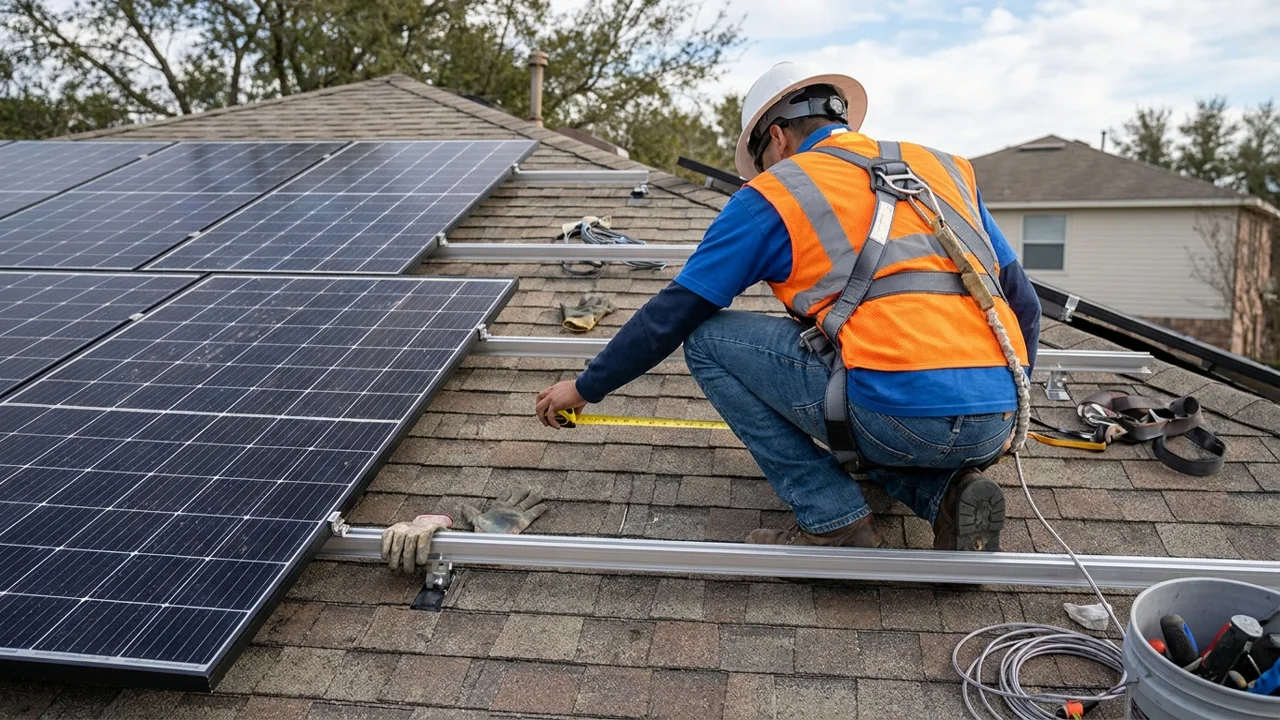
Roof area is where many plans change. The CertainTeed 400 W module CTM10400HC11-06 measures 1,722 × 1,134 mm on its manufacturer datasheet, about 67.8 × 44.6 inches. That is 1.95 m², or about 21 sq ft per panel.
Plan for more roof than that: fire code setbacks, vents, chimneys, skylights and gaps between rows take space, and rules vary locally. The DOE homeowner guide notes that panels typically perform best on south-facing roofs with a slope between 15 and 40 degrees, though other roofs may work. If the good roof planes cannot fit the panel count, you either accept a smaller system, use higher-wattage panels, or move part of the array to the ground.
Before you sign a contract, make sure the quote shows these assumptions. Our guide on what a home solar proposal should explain before you sign lists the usage, production and shading assumptions to ask for.
Panel wattage does not change how much energy you need, only how many modules and how much roof it takes.
The JA Solar JAM54D41 440/MB datasheet lists a 440 W module at 1,722 × 1,134 mm, practically the same footprint as the 400 W example above. For the worked example:
The 440 W panel saves one module here and fits about 10% more kW on the same roof (21 sq ft ÷ 0.44 kW = about 48 sq ft per kW). Because of rounding, the saving is not always proportional. Higher-wattage residential modules are often bifacial; on a flush roof mount, the rear side adds little, as explained in our article on whether bifacial solar panels are worth it.
The formula above sizes a grid-tied system on annual energy, because the grid absorbs summer surplus and covers winter shortfall.
An off-grid or battery-backed system is sized differently:
Our deep dive on batteries, warranties and backup power explains how storage and backup choices affect the design.
The math is the same on larger properties. A shop, well pump or small farm that uses 30,000 kWh a year needs 30,000 ÷ 1,460 = 20.5 kW at 5 peak sun hours, or 20,548 ÷ 400 = 51.4, rounded up to 52 panels of 400 W.
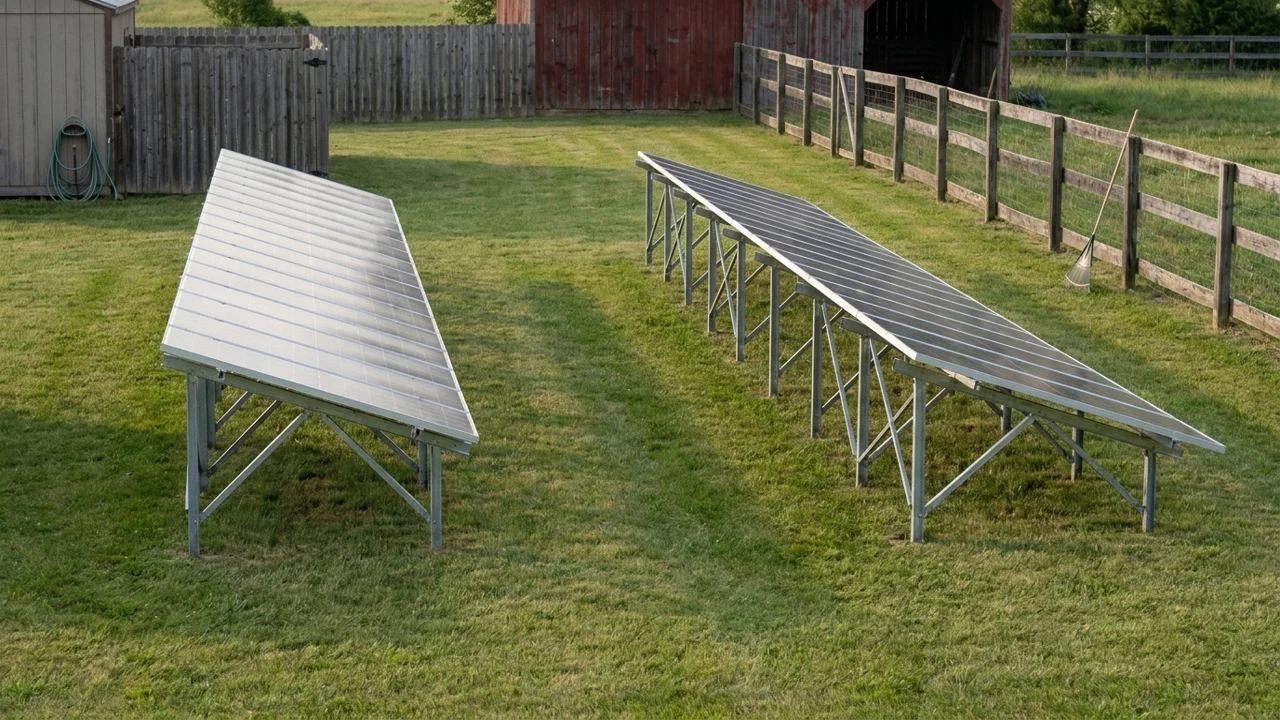
At that scale, buying full pallets can lower the price per watt. Our guide to solar panels by the pallet covers pallet quantities, costs and delivery checks. You can compare modules by wattage and size in the A1 SolarStore solar panels catalog.
Divide your annual kWh by (peak sun hours × 365 × 0.80) to get kW, then multiply by 1,000 and divide by the panel wattage. For an average US home using about 10,360 kWh a year (EIA, 2024 data), that is about 18 panels of 400 W at 5 peak sun hours and 23 panels at 4 peak sun hours.
Usually not fully. Ten 400 W panels make a 4 kW system, which produces about 4 × 1,460 = 5,840 kWh a year at 5 peak sun hours and a 0.80 derate. That covers about 56% of the 2024 average US home’s 10,360 kWh, but it could cover a small, efficient home that uses around 500 kWh a month in an area with about 5.5 peak sun hours.
Floor area does not set the panel count; electricity use does, and it varies with climate, heating fuel and appliances. Start from 12 months of bills. If your use matches the US average of about 863 kWh a month, plan on about 18 panels of 400 W at 5 peak sun hours.
1,000 kWh a month is 12,000 kWh a year. With 400 W panels and a 0.80 derate, that takes about 26 panels at 4 peak sun hours, 21 panels at 5 hours and 19 panels at 5.5 hours.
It changes the panel count and roof area, not the energy you need. In our example, 7.1 kW takes 18 panels of 400 W or 17 panels of 440 W of nearly the same size.
The DOE homeowner guide says NREL uses an average residential system size of 7.15 kW DC in its analyses, with a range of 3 to 11 kW. Your own size depends on your usage, sun hours and roof.