Phone:
(877)-898-5303
Physical address:
One Glenlake Parkway Suite 650 &, 700, Atlanta, Georgia 30328

Phone:
(877)-898-5303
Physical address:
One Glenlake Parkway Suite 650 &, 700, Atlanta, Georgia 30328
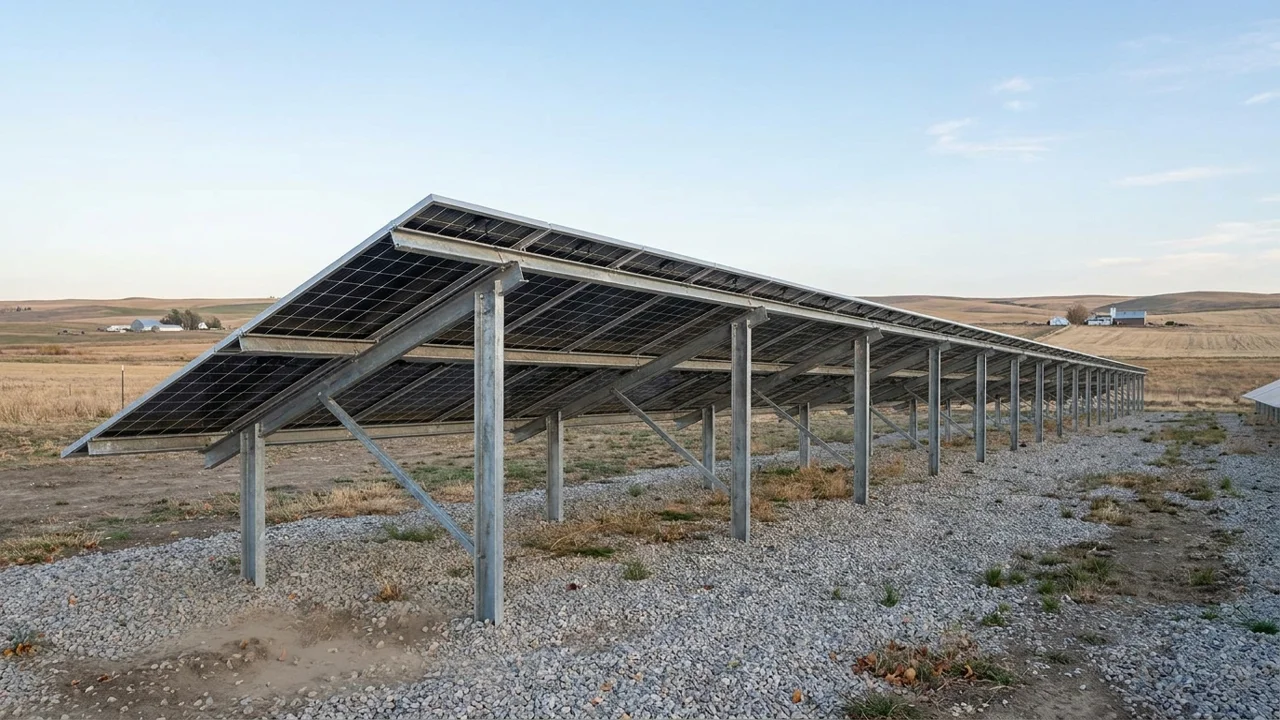
Bifacial solar panels collect light on both faces. The front works like any other module, and the rear picks up light reflected from the ground, a roof membrane or nearby surfaces. Many current N-type modules are bifacial, so the real question is how much the rear side will add on your site and whether that is worth the weight, price and design details.
Key takeaways
A conventional (monofacial) panel has an opaque white or black backsheet, so only the front generates power. Bifacial solar panels replace that backsheet with a second sheet of glass (glass-glass) or a transparent backsheet, and use cells that can convert light arriving from the back as well. Modern N-type TOPCon and heterojunction cells are naturally suited to this, which is why so many current high-wattage modules are bifacial by default.
The rear side is less efficient than the front. Manufacturers express this as the bifaciality factor, the ratio of rear-side to front-side efficiency. The PVWatts Version 8 documentation from NREL (now NLR) describes it as “typically a value between 0.65 and 0.9” and tells users to take it from the module datasheet.
The rear side runs on reflected and diffuse light, so its output depends on three things:
Array size matters too. A 2017 study by NREL, Sandia and the University of Iowa found that in large arrays the middle module can produce up to 7% less energy than a single isolated bifacial module at 21% albedo, because the rows shade the ground beneath one another. A single test panel overstates what a full array delivers.
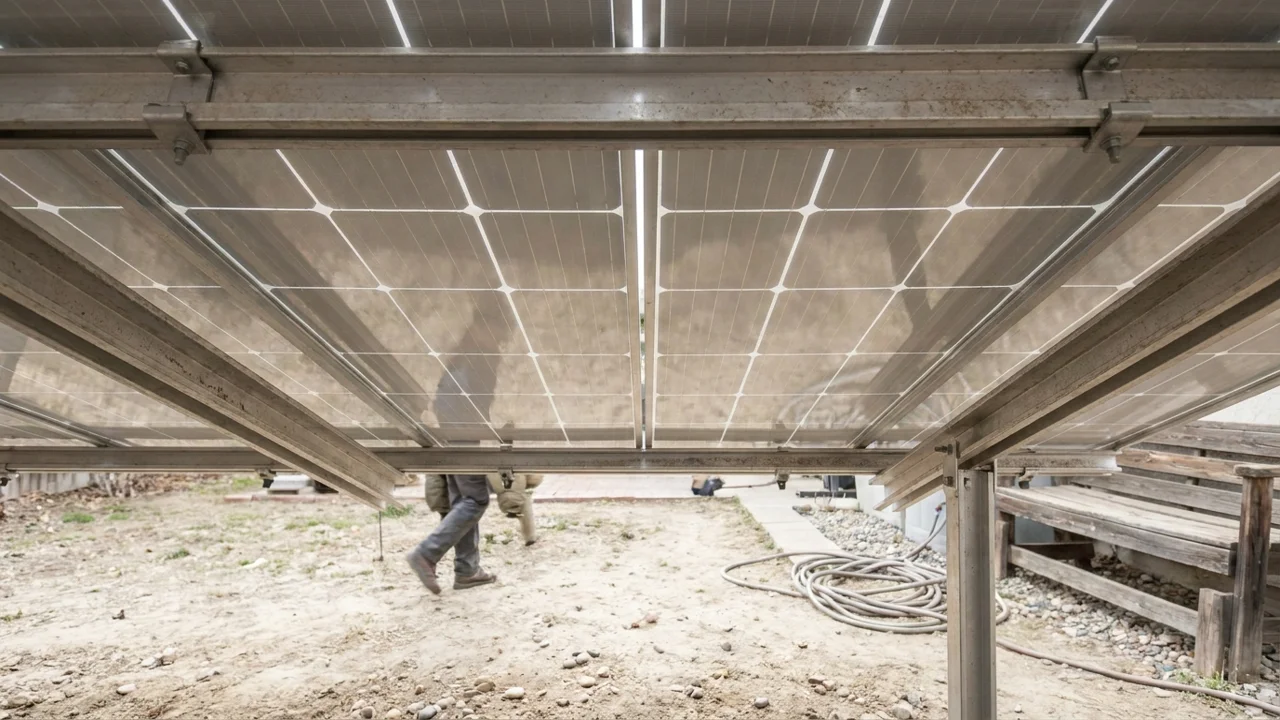
Some of the best-documented US field data comes from NREL and Sandia. In a 2019 paper in the IEEE Journal of Photovoltaics, researchers compared bifacial and monofacial systems on single-axis trackers in Albuquerque, New Mexico, and eastern Oregon. Bifacial modules raised energy yield by 4% to 15% depending on module type and albedo, with a global modeled average of 9%. The Oregon bifacial system ran a performance ratio 9.4% higher than its monofacial twin. The same study warned that a center-mounted torque tube can cut rear irradiance by up to 20%.
Treat 5% to 10% as a realistic planning range for a well-designed ground or tracker system on ordinary ground, and anything above that as something your site has to earn with high albedo, height and clean rear-side geometry. Headline claims of much larger gains usually describe ideal conditions, such as snow cover or a single raised test module, not a typical install.
| Factor | Bifacial | Monofacial |
|---|---|---|
| Rear side | Glass or transparent backsheet, generates from reflected light | Opaque backsheet, no rear generation |
| Typical extra energy | About 0–15%+ depending on site; near zero when flush-mounted on a dark roof | None |
| Weight (example 144-cell, 590–600 W) | About 70 lb in the listings below | Often lighter with a backsheet; check the datasheet |
| Best fit | Ground mounts, trackers, carports, light flat roofs, snow regions | Flush-mounted residential roofs, dark surfaces |
| Price per watt | Varies by model; compare per-watt listings | Varies; older PERC clearance stock can be cheaper per watt |
The practical conclusion: where the rear side can see light, a bifacial module adds real energy. Where it cannot, it behaves like a heavier monofacial panel.
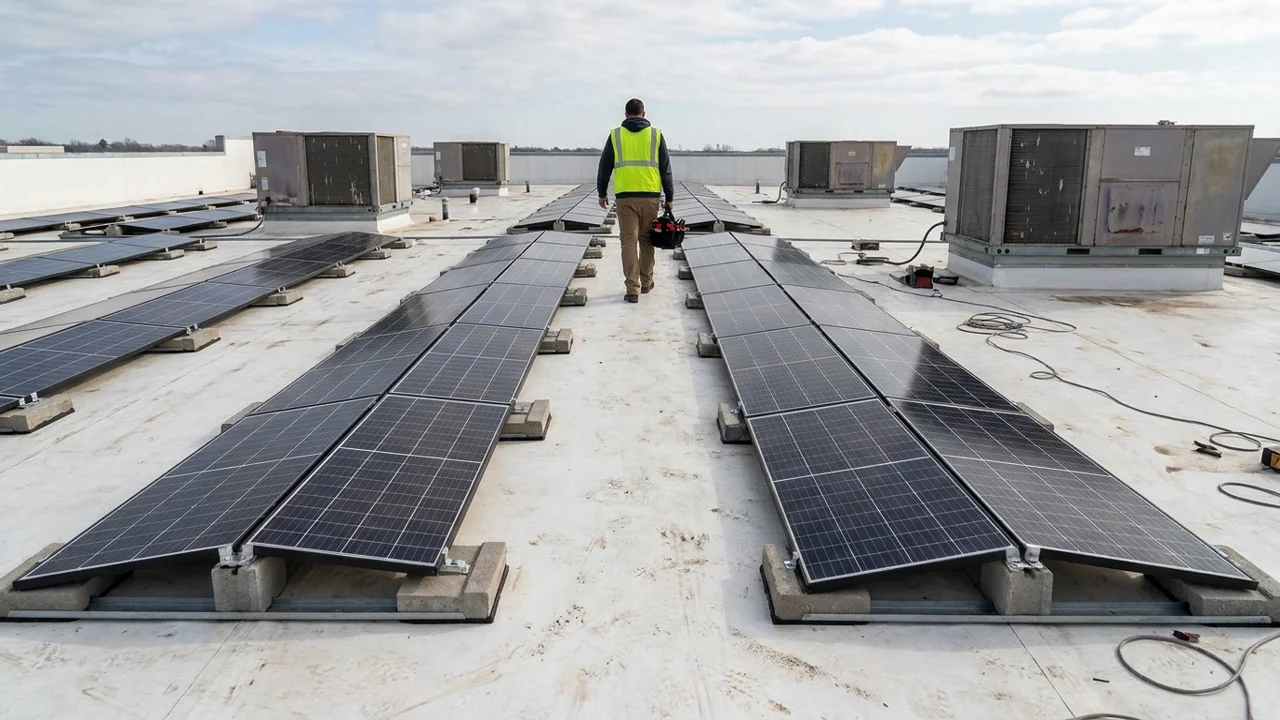
Bifacial solar panels on roof installations are common simply because many modules are bifacial by default. On a typical pitched residential roof, flush-mounted a few inches above dark shingles, the rear sees a narrow, shaded gap over a surface with low reflectivity. The gain is small, so judge the module on front-side power, price, warranty and weight, and treat any rear-side contribution as a bonus. When reviewing an installer’s offer, ask how the production estimate treats the rear side. Our guide on what a home solar proposal should explain before you sign covers how to check those assumptions.
Weight is also a roof question. The 144-cell bifacial modules in the table below weigh about 70 lb each, so confirm that your racking and roof structure are rated for them.
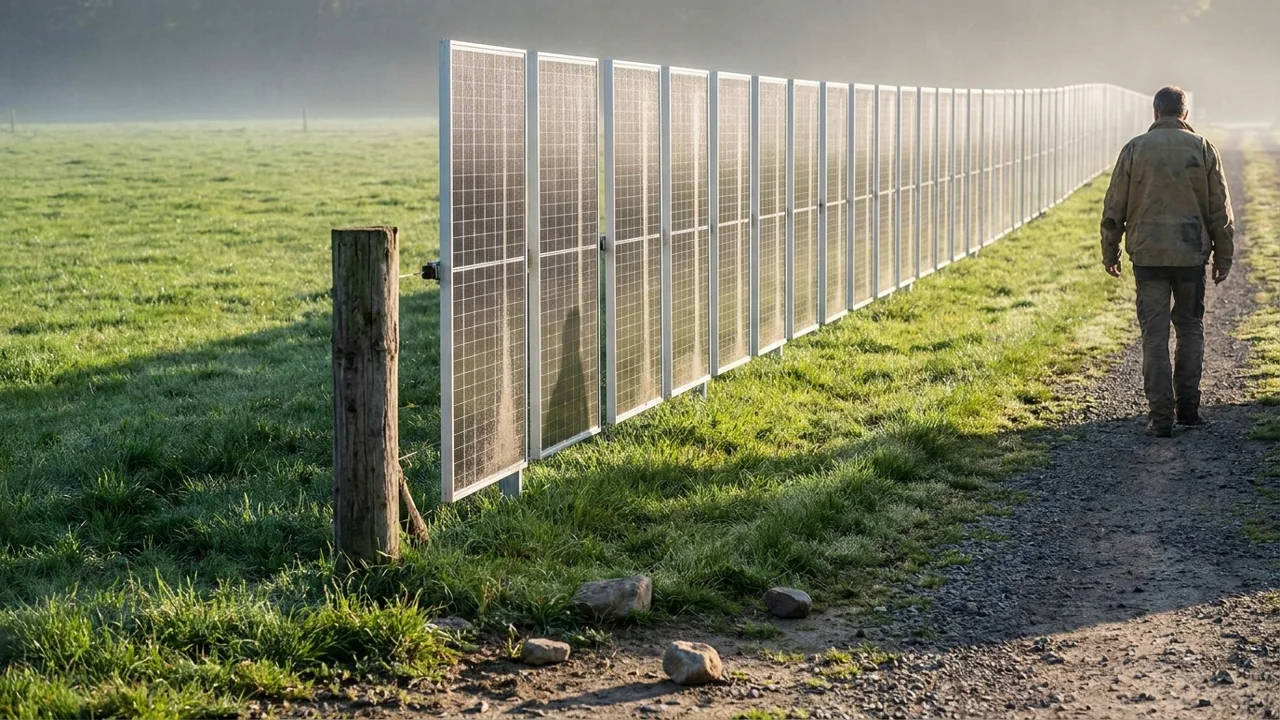
Vertical bifacial solar panels stand upright like a fence, usually facing east and west, so each face catches the sun in turn. They are used on farms, along fences and in snowy areas where snow does not settle on a vertical face.
The research is nuanced. A Sandia field report (2016) from the New Mexico Regional Test Center measured bifacial gains of 18% to 136% over monofacial modules in the same orientations, with the largest gain on vertical west-facing modules. Those are six months of data from one small 9.6 kW test array, and the largest figure compares vertical bifacial with vertical monofacial modules. The report did find that the vertical west-facing bifacial modules out-produced monofacial modules at every orientation tested, so treat it as a promising early result, not a planning number. A 2018 modeling study by the University of Iowa, NREL and Sandia found that without obstructions, tilted south-facing bifacial modules outproduce vertical east-west ones at most locations, but obstructions to the south can reverse that, especially at higher latitudes. Vertical systems mainly shift output toward morning and late afternoon; whether they beat a tilted array over a year depends on the site.
Assumptions for illustration only: a ground mount of 20 bifacial panels at 600 W each, and front-side production of 1,400 kWh per kW per year. Your own figure depends on location, tilt and shading. You can estimate it for free with PVWatts, which supports bifacial modules and albedo inputs.
| Rear-side gain | Extra energy per year | Total per year | Value of extra energy at $0.15/kWh |
|---|---|---|---|
| 5% | 16,800 × 0.05 = 840 kWh | 17,640 kWh | 840 × $0.15 = $126 |
| 10% | 16,800 × 0.10 = 1,680 kWh | 18,480 kWh | 1,680 × $0.15 = $252 |
| 15% | 16,800 × 0.15 = 2,520 kWh | 19,320 kWh | 2,520 × $0.15 = $378 |
Suppose a bifacial module costs $0.05 per watt more than a comparable monofacial one. The premium for this array is then 12,000 W × $0.05 = $600. At a 10% gain, $600 ÷ $252 per year is about 2.4 years to recover the premium (ignoring degradation and rate changes). If the price difference is zero, any rear-side gain is free energy. The electricity price of $0.15/kWh is an assumption, so replace it with your own rate.
The table below uses a snapshot of A1 SolarStore listings checked on October 12, 2026. Prices change often and several items showed limited stock, so treat this as an example of current pricing, not a quote. Per-watt values are the listing price divided by rated watts.
| Panel | Cells / type | Weight | Efficiency (listed) | Warranty (product / performance) | Listed at about | Per watt |
|---|---|---|---|---|---|---|
| JA Solar 600 W JAM72-D40-600MB, assembled in the USA | 144, N-type TOPCon | 70.11 lb | 23.2% | 12 / 30 years | $300 | $0.50/W |
| Phono Solar 590 W PS590M8GF-24/TNH | 144, N-type | 70.55 lb | 22.84% | 15 / 30 years | $257.83 | $0.44/W |
| Hyundai 435 W HiN-T435NF(BK), all-black | 108, N-type TOPCon | 50.01 lb | 22.28% | 25 / 30 years | $203.58 | $0.47/W |
| JA Solar 440 W JAM54-D41-440MB (clearance) | 108, N-type | 47.4 lb | 22.5% | 25 / 30 years | $168.92 | $0.38/W |
The large 144-cell modules such as the JA Solar 600 W assembled in the USA and the Phono Solar 590 W suit ground mounts and commercial rows, while the lighter 108-cell modules fit residential roofs where the rear side is a bonus. For a full ground array, buying a full pallet can lower the price per watt. See our guide to solar panels by the pallet. You can compare more models in the A1 SolarStore solar panels catalog.
For ground mounts, trackers, carports and tilted rows on light flat roofs, usually yes. Field research shows real gains there. For a flush-mounted home roof, choose the panel on price, front-side power, warranty and weight, and do not pay a premium for the rear side. The best bifacial solar panels for your project are the ones whose datasheet, weight and warranty fit the mounting you plan to build.
They are solar panels that generate electricity from both sides. The rear uses glass or a transparent backsheet instead of an opaque backsheet, so it can convert light reflected from the ground or the surface below.
It depends on the site. NREL field and modeling work published in 2019 found 4% to 15% more energy on single-axis trackers, about 9% on average. Flush-mounted panels on a dark roof gain very little.
On a ground mount, carport or pergola, often yes. On a flush-mounted pitched roof, the rear side adds little, so choose the panel on price, front-side power, warranty and weight.
A monofacial panel generates only from the front. A bifacial panel also generates from the rear, is often heavier because of the second glass layer, and benefits from height and reflective surfaces.
Not usually over a full year compared with well-tilted south-facing panels. Research shows they shift output to the morning and late afternoon, and they can win where obstructions block the southern sky or where snow is common.
It is the ratio of rear-side to front-side efficiency, listed on the datasheet. The PVWatts documentation from NLR (formerly NREL) describes typical values between 0.65 and 0.9.