Phone:
(877)-898-5303
Physical address:
One Glenlake Parkway Suite 650 &, 700, Atlanta, Georgia 30328

Phone:
(877)-898-5303
Physical address:
One Glenlake Parkway Suite 650 &, 700, Atlanta, Georgia 30328
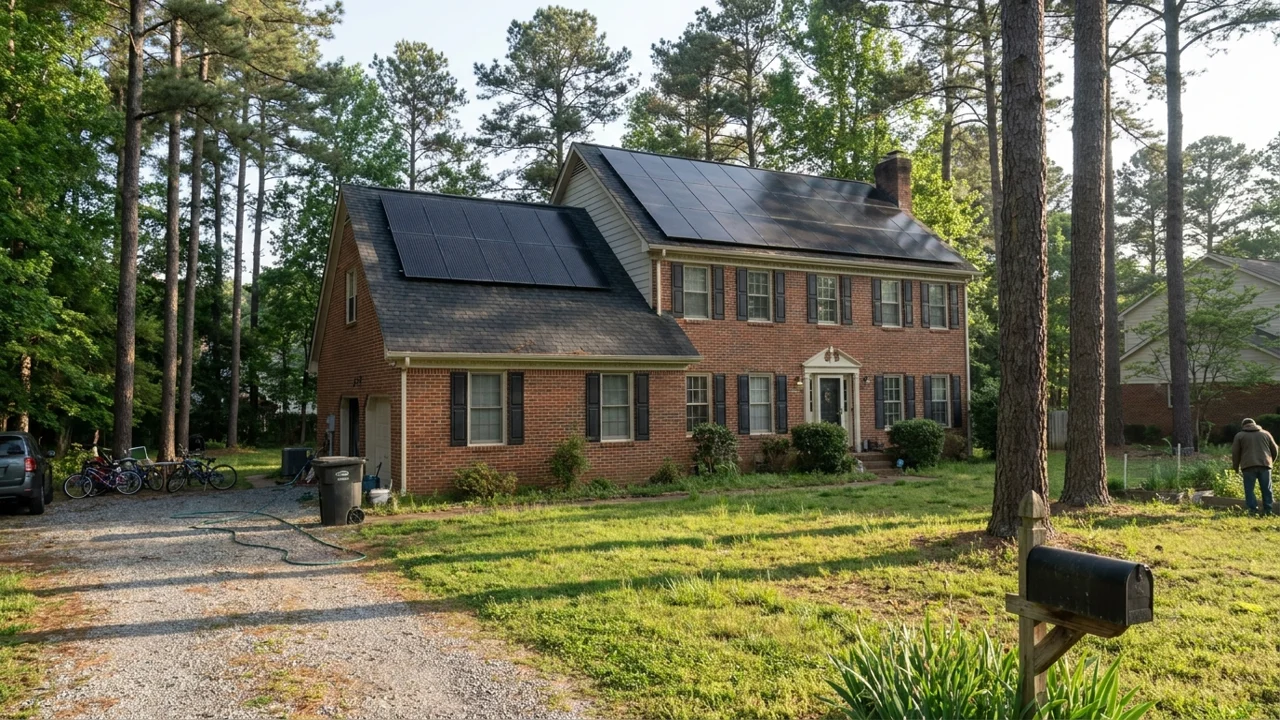
Rooftop solar economics in North Carolina changed in October 2023, when Duke Energy moved new residential customers to a time-of-use net metering rider. Electricity prices have also risen quickly. If you are a homeowner, farm, small business or installer weighing solar in North Carolina, this guide explains prices, net metering, the incentives that still exist and how hurricanes and humidity affect what you should buy.
Key takeaways
| Metric | What to know | Source/date |
|---|---|---|
| Average residential electricity price | 15.16 ¢/kWh (July 2026), up from 13.37 ¢/kWh in July 2025; U.S. average 18.31 ¢/kWh | EIA Electric Power Monthly, Table 5.6.A, released Sept. 24, 2026 |
| Average commercial electricity price | 10.73 ¢/kWh (July 2026) | EIA, same table |
| Main utilities | Duke Energy Carolinas, Duke Energy Progress and Dominion Energy North Carolina (regulated by the NC Utilities Commission), plus electric co-ops and city utilities | NC Utilities Commission, Oct. 2026 |
| Net metering and export credit | Duke Energy: Residential Solar Choice since Oct. 1, 2023 (time-of-use rate required, exports credited below retail); earlier customers keep previous terms | NCUC order of March 23, 2023 (Docket E-100, Sub 180); WFAE, Sept. 2024 |
| Sun resource | About 1,540 kWh per kWp per year in Raleigh, 1,550 in Charlotte and Asheville and 1,570 in Wilmington (roughly 5.2 to 5.3 peak sun hours on an optimally tilted panel) | Global Solar Atlas, long-term averages, accessed Oct. 2026 |
| State incentives | No state income tax credit since 2016; 80% property tax exclusion (G.S. 105-275(45)); a 2026 bill would end it for systems placed in service on or after July 1, 2027 | UNC School of Government bill summary, June 30, 2026 |
| Federal homeowner credit | Section 25D not available for property placed in service after Dec. 31, 2025 | IRS, Oct. 2026 |
At 15.16 cents per kWh in July 2026, North Carolina residential power was still below the U.S. average of 18.31 cents, but it rose faster than the national average over the year, according to the EIA. Businesses paid 10.73 cents. Rising rates improve the value of every kWh you produce and use yourself.
Most North Carolinians are served by Duke Energy Carolinas (largely the west and Piedmont) or Duke Energy Progress (largely the east and the Raleigh area). Dominion Energy North Carolina serves the northeast. These investor-owned utilities are regulated by the North Carolina Utilities Commission (NCUC). Electric co-ops and city utilities set their own solar terms, so check your utility’s tariff first.
In March 2023, the NCUC approved revised net metering tariffs for Duke Energy under a 2017 state law that requires net metering customers to pay their full fixed cost of service. The new rules took effect on October 1, 2023, and the North Carolina Court of Appeals upheld them in September 2024 (WFAE).
What this means for equipment: a system sized to cover daytime use, perhaps with west-facing panels or a battery to cover the evening peak, usually gets more value under a time-of-use rate than a system sized to export as much as possible. Duke has also offered solar-plus-battery incentives in North Carolina (PowerPair), with limited capacity; ask Duke Energy whether enrollment is still open before you count on it. The Avolta guide to batteries and backup power covers sizing.
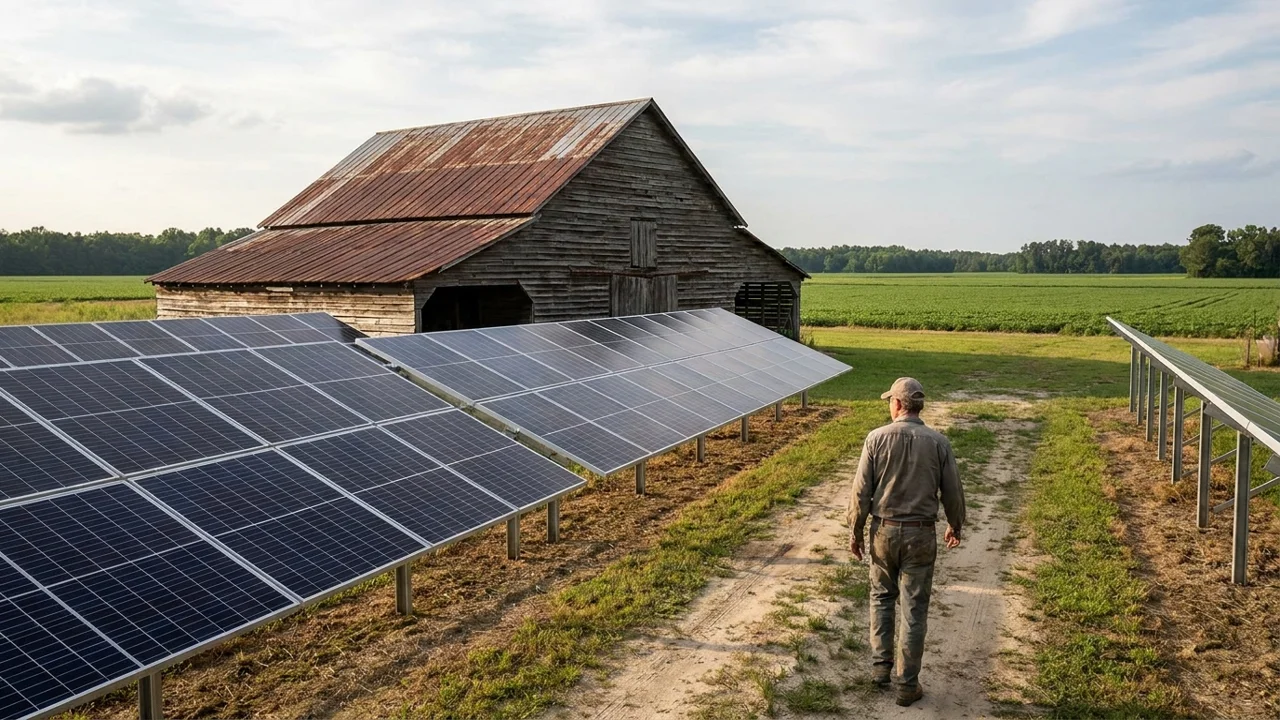
NOAA counted 121 billion-dollar weather disasters in North Carolina from 1980 to 2024, including 31 tropical cyclones, 54 severe storms and 16 winter storms. Tropical cyclones accounted for 83.5% of the total cost (NOAA NCEI). Hurricane Helene in September 2024 showed that the risk reaches the mountains as well as the coast (National Hurricane Center report).
For equipment and regional details, browse the solar panels range and A1 SolarStore’s North Carolina solar guide. Before you sign an installer’s offer, read what a home solar proposal should explain before you sign, and make sure the savings estimate uses the Residential Solar Choice time-of-use rates, not the old retail net metering.
Email: [email protected]
Phone: 801-618-2079
131 Wind Chime Court Suite A, Raleigh, NC 27615
Yes, but the terms changed. New Duke Energy residential customers use Residential Solar Choice, which requires a time-of-use rate and credits exports below the retail price. Dominion Energy, co-ops and city utilities have their own tariffs.
No. The state’s 35% renewable energy tax credit expired for property placed in service on or after January 1, 2016. The main state benefit now is the 80% property tax exclusion for solar energy electric systems.
Not for property placed in service after December 31, 2025, according to the IRS. Commercial projects follow different rules; check with a tax professional.
Duke Energy has offered solar-plus-battery incentives in North Carolina with limited capacity. Ask Duke Energy whether enrollment is open before you rely on it.
On the coast, yes: use racking and attachments engineered for your site’s design wind speed, modules with strong mechanical load ratings and corrosion-resistant hardware.