Phone:
(877)-898-5303
Physical address:
One Glenlake Parkway Suite 650 &, 700, Atlanta, Georgia 30328

Phone:
(877)-898-5303
Physical address:
One Glenlake Parkway Suite 650 &, 700, Atlanta, Georgia 30328
Idaho has some of the cheapest electricity in the United States, but prices rose by double digits over the past year, and the state’s largest utility now pays very different amounts for exported solar depending on the season and the time of day. For homeowners, farms and businesses, that makes timing as important as system size. This guide explains Idaho Power’s and Rocky Mountain Power’s export credit rates, the Idaho income tax deduction, the snow and cold your equipment must handle, and how to choose what to buy.
Key takeaways
| Metric | What to know | Source/date |
|---|---|---|
| Average residential electricity price | 13.73¢/kWh in July 2026; 12.96¢ year to date (Jan–Jul 2026), up 12.0% on 2025 | EIA Electric Power Monthly, Sept 2026 release |
| Main utilities | Idaho Power sold about 59% of residential electricity in 2024, Avista about 14% and PacifiCorp (Rocky Mountain Power) about 8%; Idaho Falls Power and Kootenai Electric Cooperative follow | EIA Idaho electricity profile, 2024 data |
| Export compensation | Real-time net billing with time-of-day export credit rates at Idaho Power and Rocky Mountain Power; older “legacy” systems keep monthly net metering | Idaho Power FAQ, checked Oct 2026 |
| Sun resource | About 5.3 peak sun hours a day on an optimally tilted panel in Boise and Idaho Falls, 4.4 in Coeur d’Alene; about 1,580 and 1,330 kWh per kW per year | Global Solar Atlas, long-term averages, retrieved Oct 2026 |
| State incentives | Alternative energy device income tax deduction (Idaho Code 63-3022C), claimed on Form 39R | Idaho State Tax Commission, Form 39R and instructions, 2025 tax year |
EIA puts Idaho’s year-to-date residential average at 12.96¢/kWh through July 2026, against 11.57¢ for the same period of 2025 and 18.19¢ for the U.S. Idaho Power serves Boise and most of southern Idaho. Rocky Mountain Power serves much of eastern Idaho, and Avista serves the north. Idaho Falls Power, other municipal utilities and cooperatives such as Kootenai Electric publish their own interconnection and billing rules. Model your savings on your own utility’s tariff, not a national average.
Idaho Power. Systems approved before the legacy cutoff keep monthly net metering. Non-legacy customers, meaning those who applied after December 20, 2020 (Idaho PUC, Oct 2025), pay the retail rate for everything they take from the grid and earn the export credit rate (ECR) for what they send back. The current ECR is 15.6836¢/kWh for summer on-peak exports, 3.3920¢ for summer off-peak and 2.9019¢ for all non-summer hours. Summer runs from June 1 to September 30, and on-peak means 3 p.m. to 11 p.m. Mountain Standard Time, Monday through Saturday, excluding holidays. Idaho Power says it will keep these rates until its April 1, 2028 filing, and credits do not expire.
Rocky Mountain Power (Idaho). Schedule 136 net billing, effective December 1, 2025, credits on-peak exports at 14.666¢/kWh from June through October and 5.597¢ from November through May. Off-peak exports earn 3.664¢ and 1.228¢. Summer on-peak runs from 3 p.m. to 11 p.m.
Under both utilities, most midday exports earn only a few cents. Panels facing west, batteries that discharge into the evening, and sizing to your own load all improve the return.
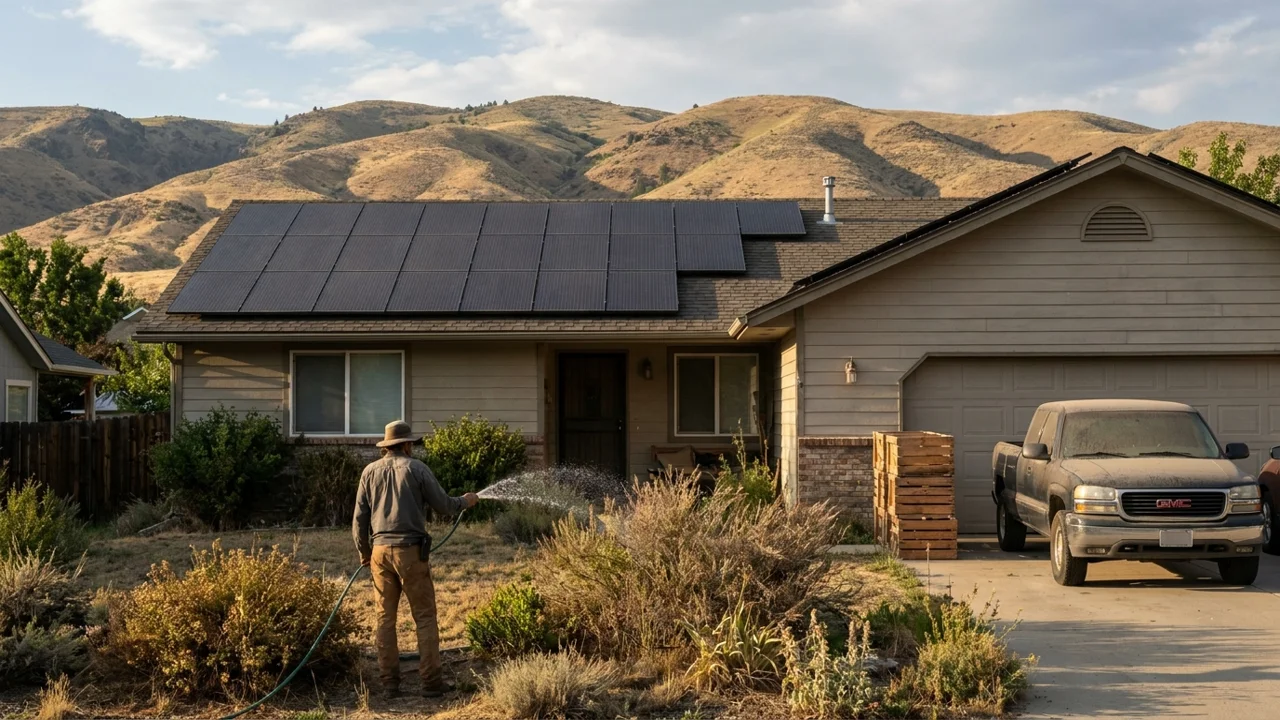
For a Boise-area home on Idaho Power, design for self-consumption and summer evenings. Consider a west-leaning array, a hybrid inverter and a battery if your evening load is high. Compare modules in the solar panels for sale range, and read A1 SolarStore’s Idaho solar guide for state-specific options.
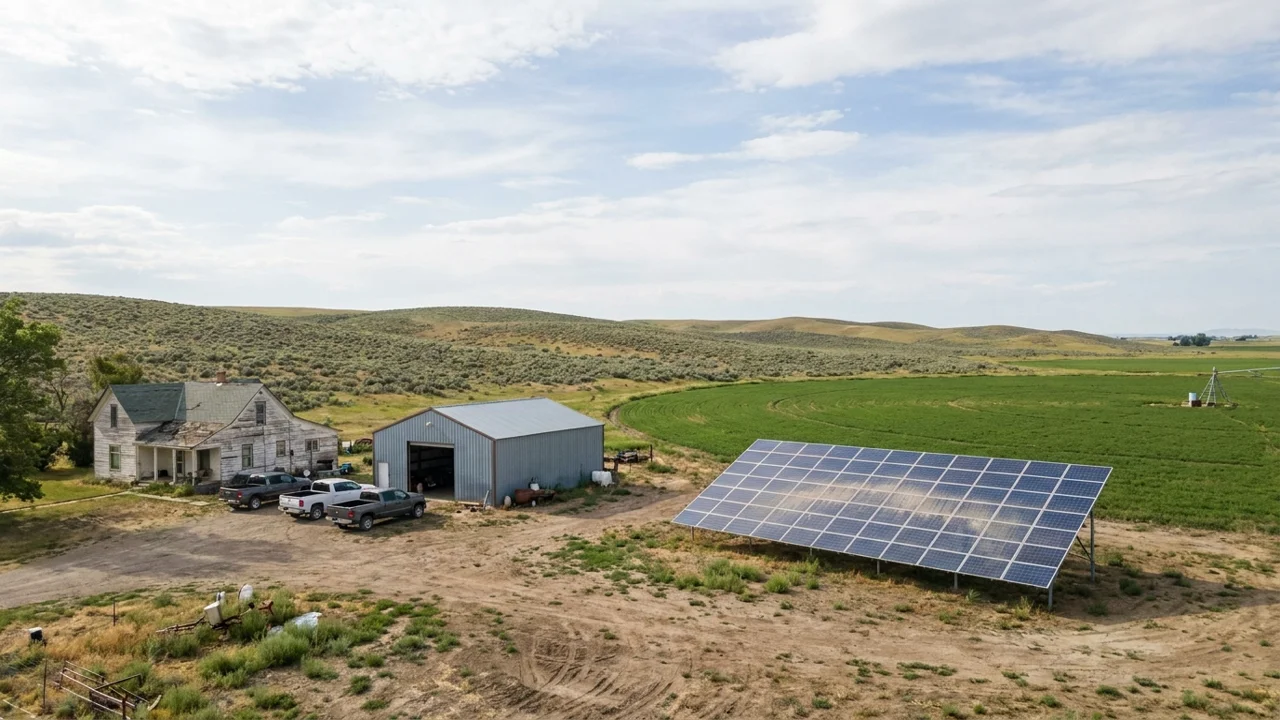
Irrigators and other large-service customers on Idaho Power’s Schedule 84 can install exporting systems up to the greater of their highest monthly billing demand in the past 12 months or 100 kW. That scale suits commercial solar panels and wholesale panels by the pallet. Our guide to buying solar panels by the pallet explains freight and price per watt. When you compare installer bids, use our checklist of what a home solar proposal should explain to confirm that savings are modeled on the export credit rate, not the retail rate.
For Idaho Power, submit a customer generation application with a non-refundable $100 fee. Idaho Power reviews the project within 7 business days and tells you whether grid upgrades are needed. Install only after approval and after you have the required building and electrical permits. After the system passes a state or city electrical inspection, submit the System Verification Form. Idaho Power then visits the site within 10 business days and installs the meter (Idaho Power). Rocky Mountain Power charges an $85 application fee under Schedule 136. Under Idaho’s Residential Energy System Disclosure Act, solar retailers must tell you that regulators can change export compensation.
Email: [email protected]
Phone: 801-618-2079
No. Idaho offers an income tax deduction, not a credit or fixed refund: 40% of the cost in the first year and 20% in each of the next three years, up to $5,000 per year, claimed on Form 39R.
For non-legacy customers, 15.6836¢/kWh for summer on-peak exports (3–11 p.m. Monday through Saturday, June–September), 3.3920¢ for summer off-peak and 2.9019¢ for all hours from October through May. These rates are expected to hold until an April 1, 2028 filing.
It depends on your utility and load. Idaho’s residential average was 13.73¢/kWh in July 2026 (EIA), and most exports earn a few cents, so systems that cover your own use, especially summer evening use, deliver the best value.
Not for a home system placed in service after December 31, 2025, according to the IRS. Business and farm projects follow separate rules, so check with a tax professional.
Residential and small general service customers can connect up to 25 kW AC. Large general service, large power and irrigation customers can connect up to the greater of their highest monthly billing demand in the past 12 months or 100 kW.