Phone:
(877)-898-5303
Physical address:
One Glenlake Parkway Suite 650 &, 700, Atlanta, Georgia 30328

Phone:
(877)-898-5303
Physical address:
One Glenlake Parkway Suite 650 &, 700, Atlanta, Georgia 30328
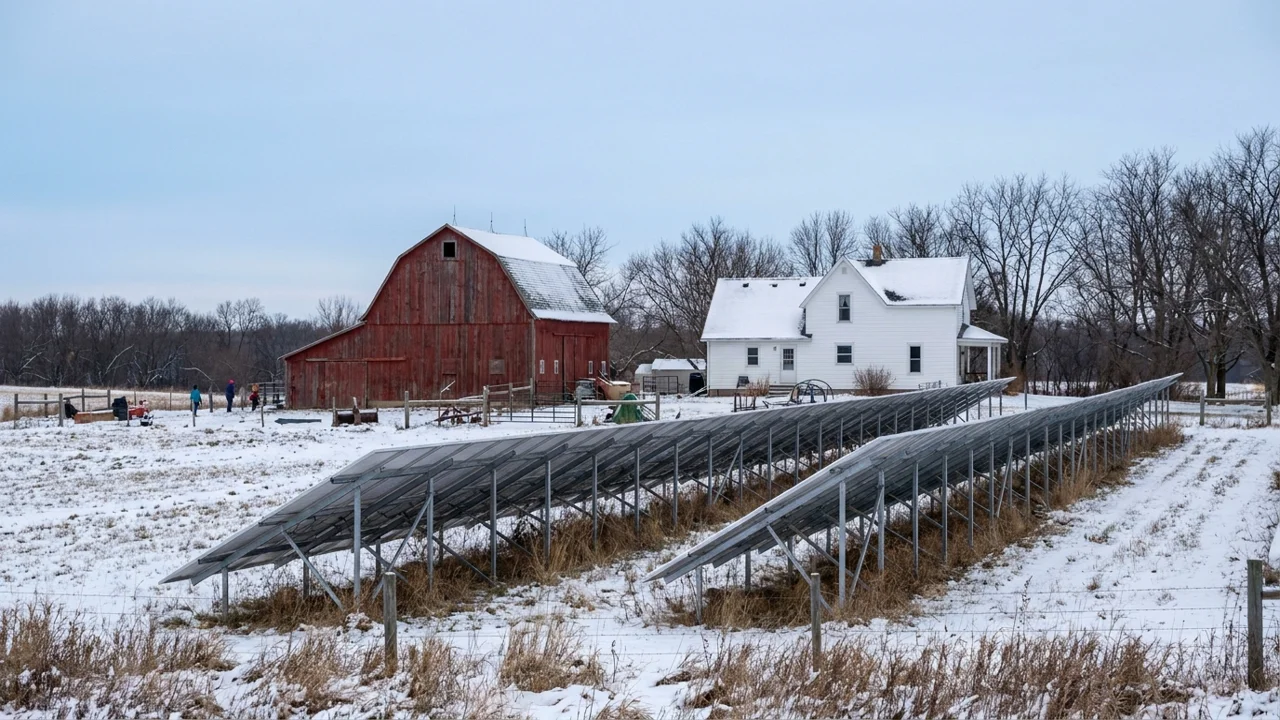
Minnesota is a better solar state than its winters suggest: NREL’s PVWatts model puts a south-facing system in Minneapolis at about 1,385 kWh per kilowatt per year, roughly the same as Richmond, Virginia. What sets Minnesota apart is net metering written into state law, Xcel Energy’s production incentive, state tax exemptions and design snow loads of 50 to 60 pounds per square foot. Here is what each means for your equipment.
Key takeaways
| Metric | What to know | Source/date |
|---|---|---|
| Average residential electricity price | 17.45¢/kWh (U.S. average 18.31¢) | EIA Electric Power Monthly, Table 5.6.A, July 2026 data |
| Main utilities | Xcel Energy, Minnesota Power, Otter Tail Power, Dakota Electric (PUC-regulated); most co-ops and municipal utilities self-regulate | Minnesota PUC, checked October 2026 |
| Net metering | Under 40 kW: net excess paid at the average retail utility energy rate; co-ops and munis may add a fixed-cost fee | Minn. Stat. § 216B.164 (2025 edition) |
| Sun resource | About 1,385 kWh/kW-year in Minneapolis and 1,296 in Duluth (4.8 and 4.4 kWh/m²/day) | NREL PVWatts v8, TMY data, 30° tilt, south-facing, 14% losses, run October 2026 |
| State incentives | Sales tax exemption; personal property tax exemption; Xcel Solar Rewards at $0.03/kWh for 10 years | Minn. Stat. §§ 297A.67 subd. 29 and 272.02 subd. 24; Xcel Energy 2026 program page |
In July 2026 Minnesota households paid an average of 17.45¢ per kWh, about 3% more than in July 2025 and below the U.S. average of 18.31¢, according to the U.S. Energy Information Administration. The Minnesota Public Utilities Commission sets rates for Xcel Energy, Minnesota Power, Otter Tail Power and Dakota Electric Association, while most cooperatives and municipal utilities answer to their own boards or city councils. Program rules, fees and paperwork differ between them, so read your own utility’s distributed generation tariff before you size a system.
Under Minn. Stat. § 216B.164, a customer with a system under 40 kW is billed for the net energy it takes from the grid and may elect to be paid for net excess at the “average retail utility energy rate”, defined as the average of the retail energy rates for your customer class. Because it is based on energy rates rather than your whole bill, it can be lower than your all-in cost per kWh. Cooperatives and municipal utilities may add a fee to recover fixed costs, based on their most recent cost-of-service study.
Larger systems from 40 kW up to 1,000 kW on a public utility such as Xcel can take kWh credits that carry forward, with any annual excess paid at the applicable rate. For net-metered solar of 40 kW or more, the law caps system size at 120% of the site’s annual energy consumption.
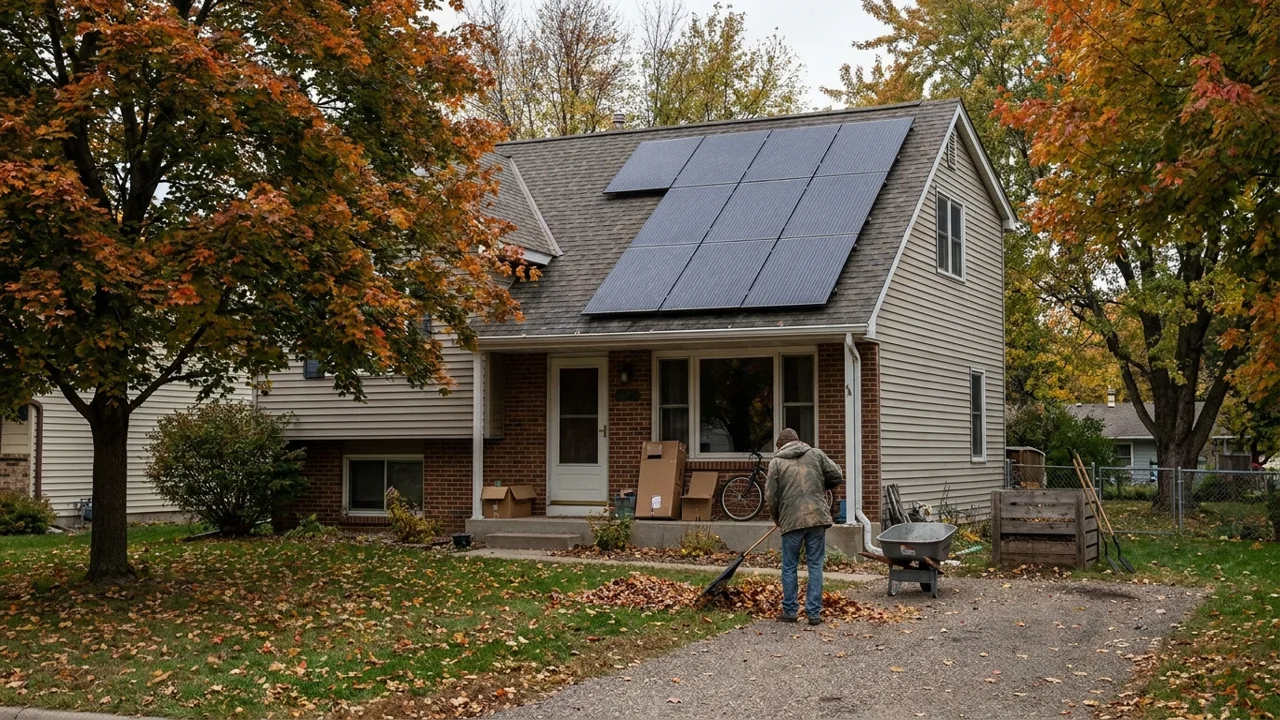
Xcel Energy Solar Rewards. Xcel pays a fixed performance incentive per kWh, not a percentage of production, in exchange for the system’s renewable energy credits. For 2026 it lists $0.03 per kWh for residential systems, paid annually for 10 years; income-qualified homes also get $3.00 per watt up front. The 2026 round opened on January 7, 2026, and the income-qualified budget has a waitlist. You must own the property, use UL 1741-certified equipment on the California Energy Commission lists, and keep expected production at or below 120% of your last 12 months of use.
State tax exemptions. Minnesota exempts solar energy systems from sales and use tax (Minn. Stat. § 297A.67, subd. 29) and exempts personal property consisting of solar energy generating systems from property tax (§ 272.02, subd. 24). There is no state income tax credit for home solar, so a “Minnesota solar tax credit” in practice means these exemptions.
Federal credits. The IRS states that the residential clean energy credit (Section 25D) “is not available for any property placed in service after December 31, 2025”, so a 26% or 30% federal refund for home solar no longer applies. For businesses and farms, IRS Notice 2025-42 explains that wind and solar facilities that begin construction after July 4, 2026, must be placed in service by December 31, 2027, to qualify for the Section 45Y and 48E credits. Check with a tax professional before you count on any federal credit.
According to NOAA’s state climate summary, Minnesota temperatures have ranged from −60°F (Tower, February 2, 1996) to 115°F (Beardsley, July 29, 1917), and annual snowfall averages 30 to 70 inches across most of the state, near 90 inches along Lake Superior.
For most homes the best fit is a grid-tied system under 40 kW sized to annual use (at or below 120% of the last 12 months for Xcel’s Solar Rewards). In practice:
Start with A1 SolarStore’s Minnesota solar guide, then compare solar panels for sale, wholesale solar panels by the pallet and commercial solar panels for larger roofs. If you are comparing installer quotes, read what a home solar proposal should explain before you sign, and for batteries and backup power see our solar energy deep dive.
According to the Department of Labor and Industry (DLI), since July 1, 2023, companies that contract with homeowners to install PV must hold a residential building contractor or remodeler license, and the installation must be performed by a Minnesota-licensed electrical contractor. PV systems need an electrical permit, plus a building permit where the State Building Code is enforced locally. Xcel takes interconnection applications in tiers (under 40 kW AC, 40 to 1,000 kW AC, above 1,000 kW AC) and advises not starting construction until approval and all agreements are signed.
Email: [email protected]
Phone: 801-618-2079
It can be. Minneapolis averages about 1,385 kWh per kW per year (NREL PVWatts), power averaged 17.45¢/kWh in July 2026 (EIA), and systems under 40 kW can be paid for net excess at the average retail energy rate.
No state income tax credit exists, but solar systems are exempt from sales tax and personal property tax. The federal Section 25D credit ended for home systems placed in service after December 31, 2025.
For 2026, $0.03 per kWh produced, paid annually for 10 years in exchange for renewable energy credits, plus $3.00 per watt up front for income-qualified homes. Funding is limited and applications open each January.
Systems under 40 kW are billed for net energy used and can elect to be paid for net excess at the average retail utility energy rate (Minn. Stat. § 216B.164). Co-ops and municipal utilities may add a fixed-cost fee.
Yes, if engineered for it. The building code sets a 60 psf ground snow load in 29 northern counties and 50 psf elsewhere, and string voltage must be checked for cold-weather Voc.