Phone:
(877)-898-5303
Physical address:
One Glenlake Parkway Suite 650 &, 700, Atlanta, Georgia 30328

Phone:
(877)-898-5303
Physical address:
One Glenlake Parkway Suite 650 &, 700, Atlanta, Georgia 30328
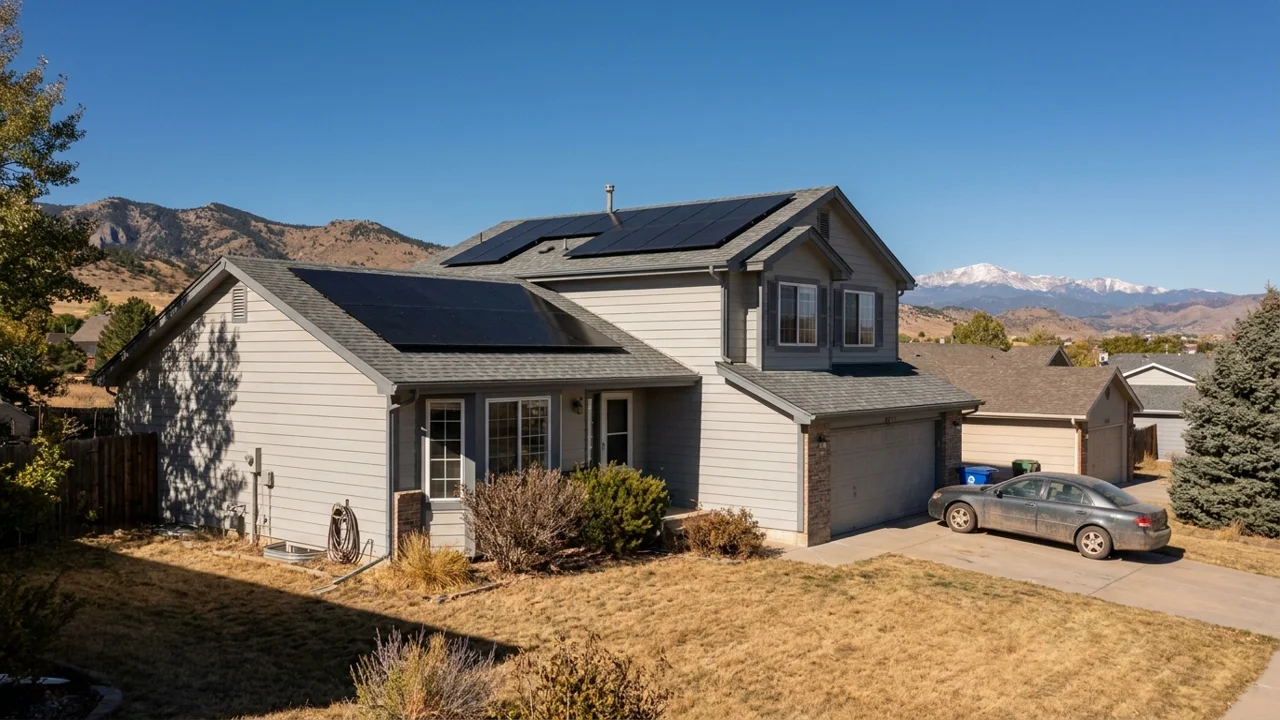
Colorado combines strong high-altitude sun, rising electricity prices and net metering that still banks exported kWh against future use for customers of investor-owned utilities such as Xcel Energy. It also sits in one of the most hail-prone corners of North America. For buyers, the economics are favorable, but the equipment has to be chosen for the climate. This guide covers prices, Xcel Energy’s rules, the incentives that exist in place of a state income tax credit, and what to look for in panels, racking and inverters.
Key takeaways
| Metric | What to know | Source/date |
|---|---|---|
| Average residential electricity price | 17.00¢/kWh in July 2026; 16.72¢ year to date (Jan–Jul 2026), up 8.0% on 2025 | EIA Electric Power Monthly, Sept 2026 release |
| Main utilities | Xcel Energy (Public Service Co. of Colorado) sold about 47% of residential electricity in 2024; Colorado Springs Utilities, United Power, CORE Electric Cooperative and Black Hills Energy follow | EIA Colorado electricity profile, 2024 data |
| Export compensation | Net metering; monthly carry-forward of excess indefinitely, or an annual payout at the utility’s average hourly incremental cost | C.R.S. 40-2-124, checked Oct 2026 |
| Sun resource | About 5.8 peak sun hours a day on an optimally tilted panel in Denver and 5.9 in Colorado Springs and Grand Junction; about 1,715–1,740 kWh per kW per year | Global Solar Atlas, long-term averages, retrieved Oct 2026 |
| State incentives | No income tax credit; state sales and use tax exemption for solar components; residential property tax exemption; local rebates in some cities and counties | C.R.S. 39-26-724; Colorado Division of Property Taxation |
Colorado’s residential price rose faster than the national average over the past year. EIA puts the year-to-date average at 16.72¢/kWh through July 2026, against 15.48¢ for the same period of 2025. Xcel Energy serves Denver, Boulder and much of the Front Range, while Colorado Springs Utilities, Fort Collins and other municipal utilities, and cooperatives such as United Power, CORE and Holy Cross set their own solar terms. Check which utility serves your meter before you compare quotes, because net metering details, fees and rebates differ.
Colorado law requires investor-owned utilities to credit excess generation against future use and to carry it forward from month to month indefinitely. Customers may instead choose an annual payout at the utility’s average hourly incremental cost of supply, which is usually well below the retail rate (C.R.S. 40-2-124). On Xcel Energy’s net metering page, you choose between “Rollover” and “Waive” for your solar bank. Systems must be sized so that expected output does not exceed 200% of your previous 12 months’ use.
Xcel solar customers can stay on the flat rate or choose time-of-use pricing. Under time-of-use, credits are tied to when you generated them, which can favor west-facing panels and batteries that cover the evening peak.
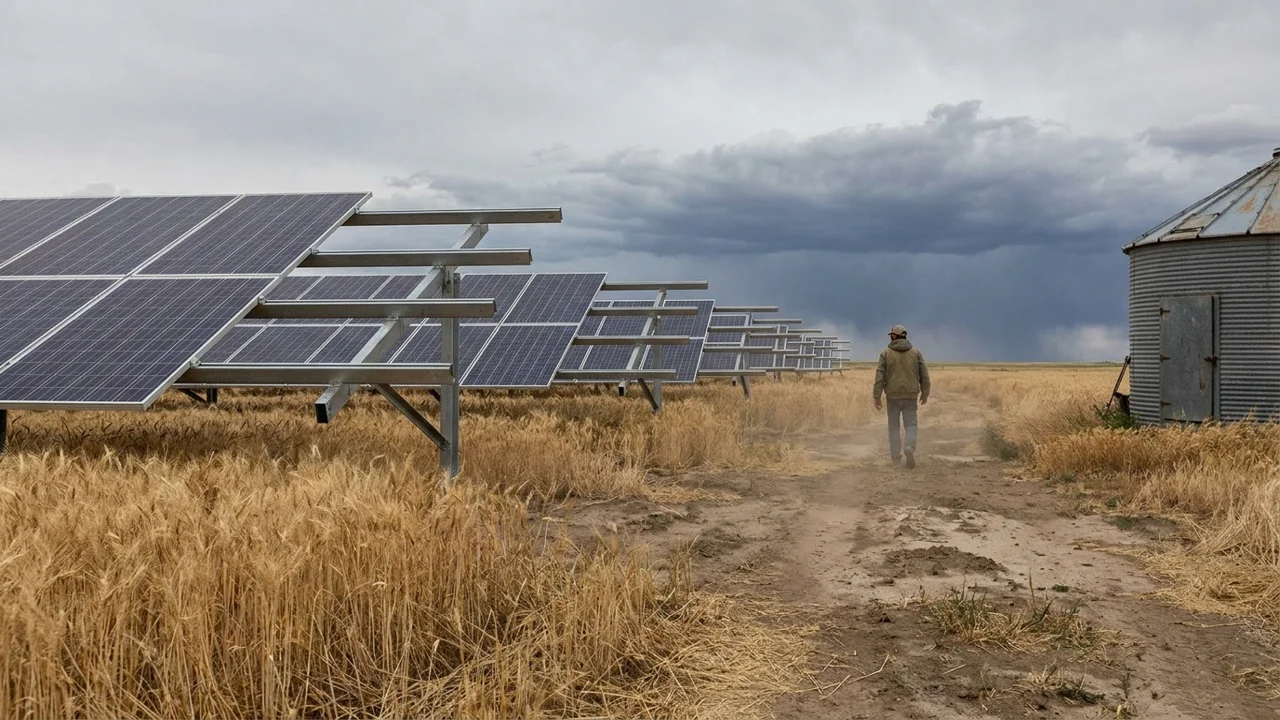
Because net metering banks exported kWh against later use, Xcel customers can reasonably size a system close to their annual use. Prioritize modules with documented hail performance and a strong product warranty, plus UL 1741 SB inverters. Browse the solar panels for sale range, and see A1 SolarStore’s Colorado solar guide for state-specific options.
Farms on the eastern plains and businesses along the Front Range can compare commercial solar panels and wholesale panels by the pallet. Our guide to buying solar panels by the pallet explains price per watt and freight. Before you sign with an installer, use our checklist of what a home solar proposal should explain. It covers whether savings assume the right rate and whether the quote names the module’s hail rating. If you are new to the topic, start with A1 SolarStore’s guides to energy freedom.
You need a building and electrical permit from your city or county, plus utility approval. Xcel Energy recommends not starting construction until its engineering team has fully approved your application and all agreements are signed. In most cases the installer submits the interconnection application, and the name on it must match the name on the Xcel account. Co-op and municipal customers follow their own utility’s process.
Email: [email protected]
Phone: 801-618-2079
900 East Lousiana Ave. Suite 209, Denver, CO 80210
No. Colorado has no state income tax credit for residential solar. It does exempt solar equipment from state sales and use tax and exempts qualifying residential systems from property tax, and some cities, counties and utilities offer rebates.
Colorado’s residential average was 17.00¢/kWh in July 2026 (EIA), and Xcel customers bank excess generation under net metering, so the economics are better than in many western states. Budget for hail-resistant equipment and get a site-specific production estimate.
Excess generation goes into a virtual solar bank and offsets future bills. You can roll credits over or choose an annual payout at the utility’s average hourly incremental cost, and systems can be sized up to 200% of your previous 12 months’ use.
Not for a home system placed in service after December 31, 2025, according to the IRS. Business projects follow separate rules with construction and in-service deadlines, so check with a tax professional.
Look for modules tested beyond the IEC minimum of a 25 mm ice ball, for example in Kiwa PVEL’s hail stress sequence with 50 mm balls, and compare glass thickness, frame strength and warranty terms for hail damage.