Phone:
(877)-898-5303
Physical address:
One Glenlake Parkway Suite 650 &, 700, Atlanta, Georgia 30328

Phone:
(877)-898-5303
Physical address:
One Glenlake Parkway Suite 650 &, 700, Atlanta, Georgia 30328
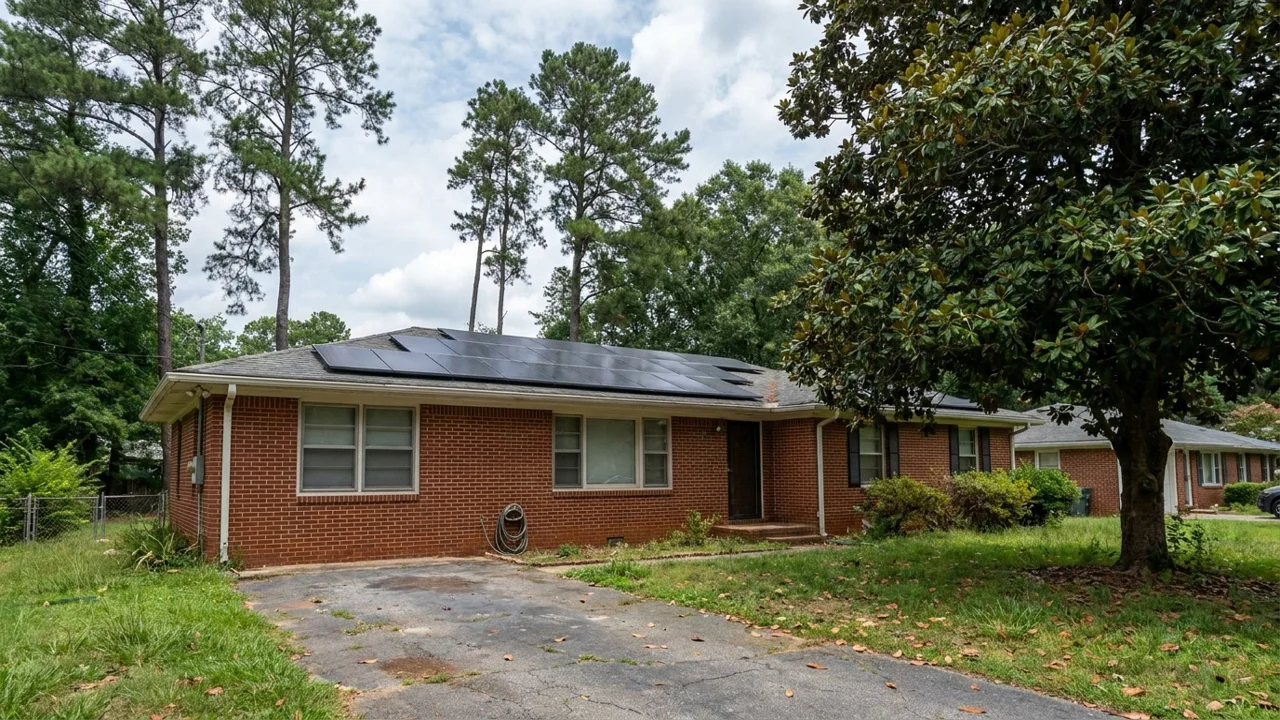
Georgia has plenty of sun: NREL’s PVWatts model puts a south-facing system in Atlanta at about 1,421 kWh per kilowatt per year. What decides whether solar pays off is how your utility credits the power you send back. For Georgia Power customers that credit is well below the retail price, so it pays to design around using solar power at home. Here are the numbers, the utilities and the equipment that suits Georgia’s heat, humidity and storms.
Key takeaways
| Metric | What to know | Source/date |
|---|---|---|
| Average residential electricity price | 16.27¢/kWh (U.S. average 18.31¢) | EIA Electric Power Monthly, Table 5.6.A, July 2026 data |
| Main utilities | Georgia Power (about 2.8 million customers, regulated by the Georgia PSC); EMCs and city-owned utilities set their own solar terms | Georgia Power press release, July 1, 2025 |
| Export compensation | Not 1:1 net metering for new Georgia Power customers: exports credited at 3.2188¢/kWh solar avoided cost plus 4¢/kWh, summed monthly | Georgia Power rooftop solar FAQ, 2026 rate |
| Sun resource | About 1,421 kWh/kW-year in Atlanta, 1,432 in Macon and 1,438 in Savannah (5.2 to 5.4 kWh/m²/day) | NREL PVWatts v8, TMY data, 30° tilt, south-facing, 14% losses, run October 2026 |
| State incentives | No statewide solar tax credit or rebate found; terms depend on your utility | Georgia Power FAQ; IRS for federal rules, checked October 2026 |
According to the U.S. Energy Information Administration, Georgia households paid an average of 16.27¢ per kWh in July 2026, up from 15.56¢ in July 2025 (about 5%).
Georgia Power, which says it serves about 2.8 million customers, is regulated by the Georgia Public Service Commission (PSC). On July 1, 2025, the PSC approved a plan to keep Georgia Power’s base rates unchanged through at least the end of 2028. Base rates exclude fuel costs, and storm costs, including those from Hurricane Helene, were left to a separate proceeding, so your bill can still change. Other Georgians are served by an electric membership corporation (EMC) or a city-owned utility. These utilities set their own solar buyback rules and fees, so ask yours for its distributed generation terms before you buy equipment.
For Georgia Power customers, the export program currently open to new participants is RNR-Instantaneous Netting. According to Georgia Power, excess energy your panels send to the grid is credited at the annual Solar Avoided Cost Rate, 3.2188¢/kWh for 2026, and the PSC approved an additional 4¢/kWh on top of that in the 2022 rate case. The excess is summed monthly and reduces your total bill. Enrollment is first come, first served until total renewable capacity in the program reaches 0.2% of the company’s previous-year peak demand. Residential systems can be up to 10 kW AC.
“Instantaneous” is the key word. Solar you use in your home at the moment it is produced avoids buying power at the retail rate. Solar you export earns about 7.2¢. So the best Georgia Power systems are sized to match daytime use, and moving loads such as pool pumps, water heating and EV charging into sunny hours raises the value of every kWh.
If you are on an EMC or a municipal system, the rules can be quite different, so get that utility’s terms in writing.

We found no current statewide solar tax credit or rebate for Georgia homeowners. Georgia Power also notes that it has no exclusive partnerships with solar developers and that customers should be wary of anyone claiming one, a useful warning when sales pitches mention “Georgia Power programs”.
Federal credits. The IRS states that the residential clean energy credit (Section 25D) “is not available for any property placed in service after December 31, 2025”. For farms and businesses, IRS Notice 2025-42 explains that wind and solar facilities that begin construction after July 4, 2026, must be placed in service by December 31, 2027, to qualify for the Section 45Y and 48E credits. Check with a tax professional before you rely on any credit.
NOAA’s state climate summary describes long, hot, humid summers and short, usually mild winters. Inland cities such as Macon and Columbus average around 20 days a year above 95°F, compared with about 7 in Atlanta. Snow is light: even the northern mountains average only about 5 inches a year. Storms are the bigger structural risk. In 2018, Hurricane Michael brought gusts as high as 115 mph to Donalsonville in southwest Georgia, and the state has had ten EF4 tornadoes since 1950.
Because self-consumption is worth more than exports for Georgia Power customers, equipment choices differ from 1:1 net metering states:
For product options, start with A1 SolarStore’s Georgia solar guide, then compare solar panels for sale, wholesale solar panels by the pallet and commercial solar panels. Before signing a quote, read what a home solar proposal should explain before you sign; savings estimates should value exported power at the 7.2188¢ credit, not at retail rates. For storage and backup, see our solar energy deep dive.
Building and electrical permits come from your city or county. For Georgia Power, you or your installer apply through the PowerClerk portal, and the interconnection agreement is solely between Georgia Power and the customer, who must sign the application. For projects of 250 kW AC or less, the interconnection fee appears as a line item on your bill after interconnection is complete; larger projects also pay a witness test fee. EMC and municipal customers apply through their own utility.
Email: [email protected]
Phone: 801-618-2079
One Glenlake Parkway Suite 650 & 700, Atlanta, Georgia 30328
It can be, but the math differs from 1:1 net metering states. Residential power averaged 16.27¢/kWh in July 2026 (EIA), while Georgia Power credits exports at 7.2188¢/kWh in 2026. Systems sized to daytime use, or paired with a battery, get the most value.
We found no current statewide solar tax credit in Georgia. The federal Section 25D credit does not apply to home systems placed in service after December 31, 2025. Business credits have separate deadlines, so check with a tax professional.
Not 1:1 net metering for new customers. The open RNR-Instantaneous Netting program credits exported energy at the 2026 solar avoided cost of 3.2188¢/kWh plus a 4¢/kWh adder, summed monthly against your bill.
Georgia Power’s RNR program allows residential systems of up to 10 kW AC. Enrollment is first come, first served until the program reaches 0.2% of the company’s previous-year peak demand.
Not on their own. Georgia Power notes that grid-tied systems shut off automatically when the grid goes down for safety. To keep power on, you need a battery or a backup-capable inverter system.