Phone:
(877)-898-5303
Physical address:
One Glenlake Parkway Suite 650 &, 700, Atlanta, Georgia 30328

Phone:
(877)-898-5303
Physical address:
One Glenlake Parkway Suite 650 &, 700, Atlanta, Georgia 30328
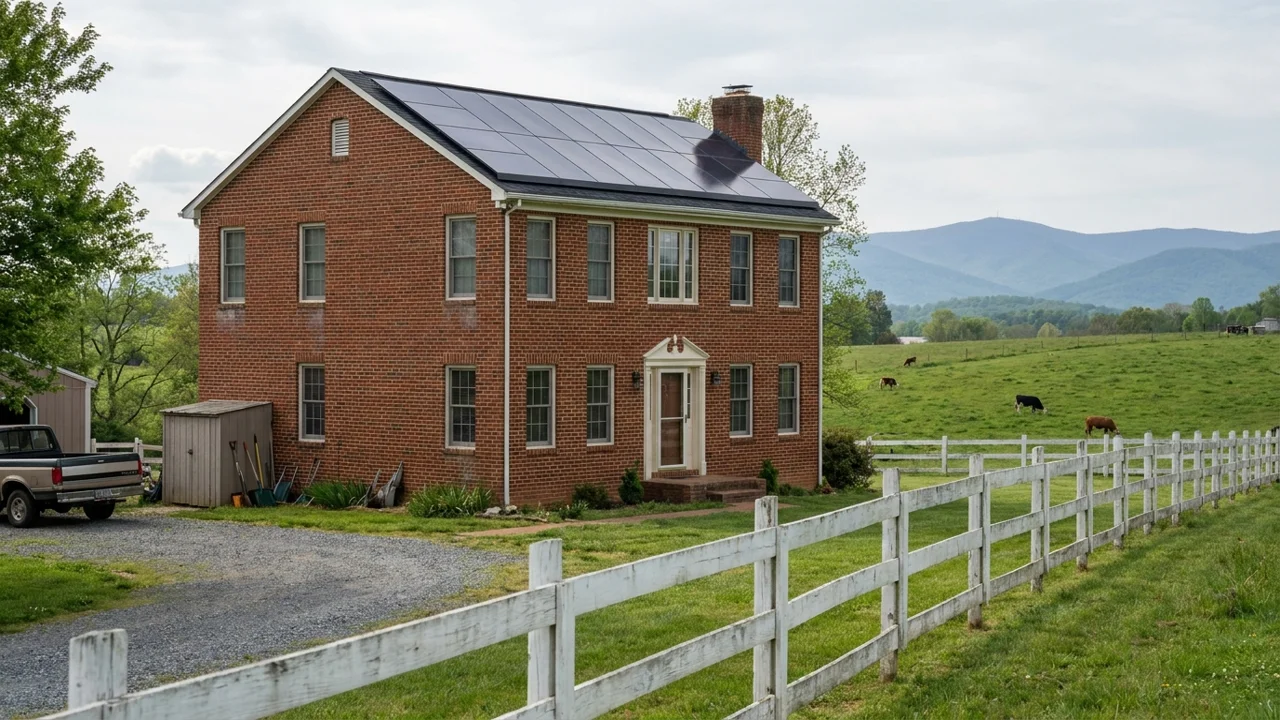
In 2025 and 2026 Virginia’s State Corporation Commission (SCC) reviewed net metering for both big investor-owned utilities and kept the 12-month netting that makes home solar work here. Meanwhile the average residential power price rose about 11% in a year. Here is what the rules mean for homes, farms and small businesses, and which equipment fits Virginia’s heat, humidity and storms.
Key takeaways
| Metric | What to know | Source/date |
|---|---|---|
| Average residential electricity price | 17.55¢/kWh (U.S. average 18.31¢) | EIA Electric Power Monthly, Table 5.6.A, July 2026 data |
| Main utilities | Dominion Energy Virginia and Appalachian Power (investor-owned, SCC-regulated); electric cooperatives have a separate net metering statute | Va. Code §§ 56-594 and 56-594.01, checked October 2026 |
| Net metering | 12-month netting; Dominion NEM 2.0 for new customers since the April 30, 2026 order; APCo’s review decided in 2025 | Va. Code § 56-594; SCC Case PUR-2025-00079 as reported May 2026 |
| Sun resource | About 1,373 kWh/kW-year in Richmond, 1,455 in Virginia Beach and 1,317 in Roanoke (5.0, 5.1 and 5.0 kWh/m²/day) | NREL PVWatts v8, TMY data, 30° tilt, south-facing, 14% losses, run October 2026 |
| State incentives | Tax exemption for home and farm systems of 25 kW DC or less; local-option exemption for other solar equipment; you keep your renewable energy certificates | Va. Code §§ 58.1-3661 and 56-594 |
According to the U.S. Energy Information Administration, Virginia households paid an average of 17.55¢ per kWh in July 2026, versus 15.78¢ in July 2025 and a U.S. average of 18.31¢.
The state’s two largest investor-owned utilities, both regulated by the SCC, are Dominion Energy Virginia and Appalachian Power (APCo). Check your bill to see which one serves you, because net metering terms and size limits differ between them. Electric cooperative members follow a separate net metering program (Va. Code § 56-594.01), so ask your co-op for its rules.
Virginia’s net metering law (Va. Code § 56-594) measures the difference between the electricity you take from the grid and the electricity you send back over a 12-month net metering period. Eligible systems can be up to 25 kW for residential customers and up to 3 MW for nonresidential customers. The law also limits size to expected use: up to 150% of the previous 12 months of consumption in Dominion territory and 100% in APCo territory. Dominion residential systems above 20 kW AC also pay a monthly standby charge. Customers keep the renewable energy certificates their systems create.
Dominion NEM 2.0. In Case PUR-2025-00079 the SCC issued a final order on April 30, 2026. As reported by Virginia installers and trade press in May 2026, the order kept kWh-based netting over the year, rejected Dominion’s proposed 30-minute netting and application fees, and approved a $1 per month administrative fee for NEM 2.0 customers. Energy left over at the end of the 12-month period is paid at a much lower rate, reported as $0.05829 per kWh. Customers who interconnected before the order keep their existing terms.
Appalachian Power. In APCo’s 2025 case the SCC kept the annual net metering period instead of the hourly netting APCo proposed; year-end surplus is paid at a lower avoided-cost-based rate. In both territories, size your system to your annual use, not more.
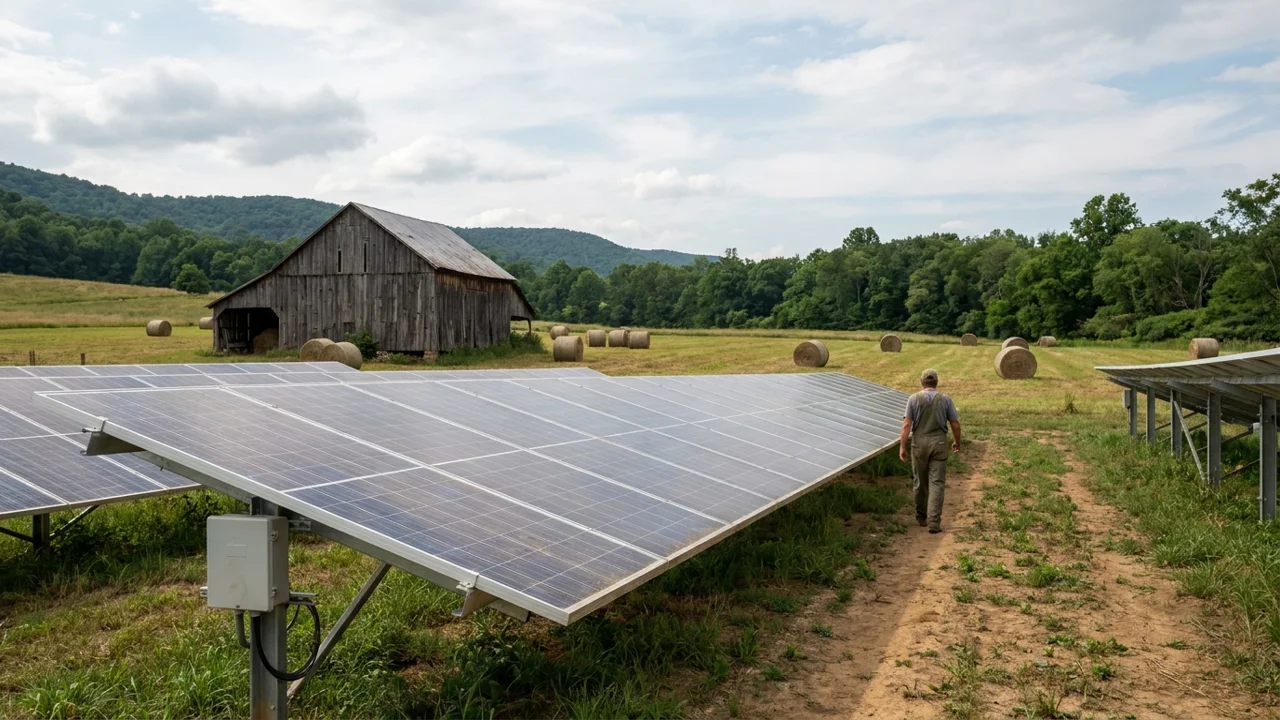
Property tax. Under Va. Code § 58.1-3661, a solar facility of 25 kW DC or less installed on residential or agricultural property under § 15.2-2288.7 is “wholly exempt from state and local taxation”. For other certified solar equipment, each county, city or town decides by ordinance whether to exempt it fully or partly.
Plug-in solar from 2027. A new section, Va. Code § 56-596.8, takes effect on January 1, 2027. It lets customers use portable solar devices of up to 1,200 W that plug into an outlet, without interconnection approval or fees, after notifying the utility on an SCC form. Devices must be certified and stop exporting during outages.
Federal credits. According to the IRS, the residential clean energy credit (Section 25D) “is not available for any property placed in service after December 31, 2025”. For farm and business projects, IRS Notice 2025-42 explains that wind and solar facilities that begin construction after July 4, 2026, must be placed in service by December 31, 2027, to qualify for the Section 45Y and 48E credits. Check with a tax professional.
NOAA’s state climate summary describes Virginia as humid, with very warm summers, moderately cold winters and statewide averages from 35°F in January to 75°F in July. Hazards include tropical storms, hurricanes, tornadoes and winter storms; the 2012 derecho brought winds of up to 70 mph at Reagan National Airport and cut power to more than 1 million people in Virginia, D.C. and Maryland.
The best value is usually a grid-tied system sized close to annual use, at or below 20 kW AC for Dominion homes. Typical choices:
For product options, start with A1 SolarStore’s Virginia solar guide, then compare solar panels for sale, wholesale solar panels by the pallet and commercial solar panels. See our guides to solar panels by the pallet and what a home solar proposal should explain before you sign; check that any savings estimate uses NEM 2.0 terms.
Va. Code § 15.2-2288.7 allows homeowners to install rooftop solar on their own dwelling, subject to zoning height and setback rules and any local historic district rules. Building and electrical permits come from your local building department. Before installing, you must notify your utility and receive approval to interconnect. The utility has 30 days to review residential applications and 60 days for nonresidential ones (Va. Code § 56-594).
Email: [email protected]
Phone: 801-618-2079
Boulders II, 7400 Beaufont Springs Drive Ste 415, Richmond, VA 23225
It can be. Power averaged 17.55¢/kWh in July 2026 (EIA), up about 11% in a year, and net metering still credits exports kWh for kWh over 12 months. Size the system to your annual use.
Virginia has no state income tax credit for home solar. Systems of 25 kW DC or less on residential or agricultural property are exempt from state and local taxation, and localities can exempt larger solar equipment. The federal Section 25D credit ended for home systems placed in service after December 31, 2025.
The SCC’s April 30, 2026 order (Case PUR-2025-00079) created NEM 2.0 for new customers. It keeps kWh-for-kWh netting over 12 months, adds a $1 monthly fee, and pays year-end surplus at a lower rate. Existing customers keep their terms.
Up to 25 kW for residential net metering, limited to 150% of the previous year’s use in Dominion territory and 100% in Appalachian Power territory. Dominion residential systems above 20 kW AC also pay a monthly standby charge.
From January 1, 2027, Va. Code § 56-596.8 allows certified portable solar devices of up to 1,200 W that plug into an outlet, without interconnection approval or fees, after you notify your utility on the SCC’s form.