Solar Panels in Texas: Costs, Buyback Plans, Incentives and What to Buy
Most Texas homes pair rooftop solar with a retail plan from the grid; the plan decides what exported power is worth.
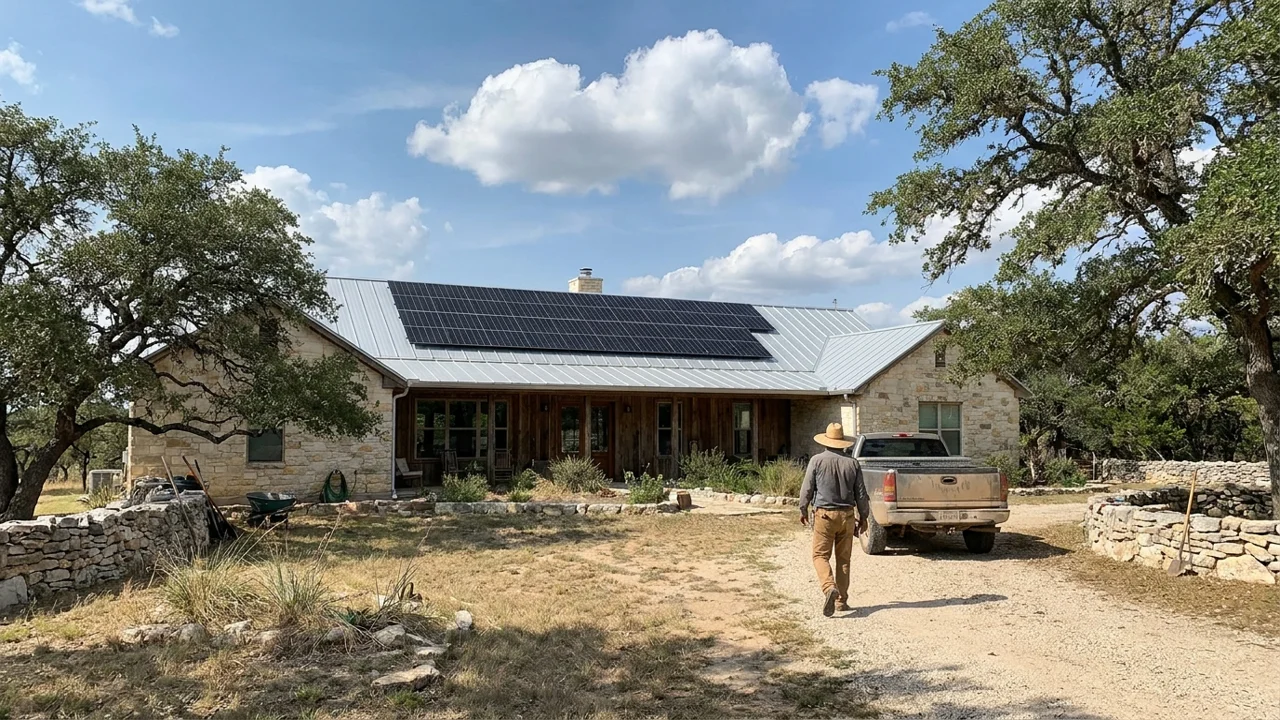
Texas has strong sun, a large and fast-growing grid and electricity prices that are below the national average, but its rules for rooftop solar are unlike most states. There is no statewide net metering, most people buy power from a retail electric provider rather than a traditional utility, and hail and hurricanes shape which equipment is worth buying. This guide covers prices, buyback plans, the incentives that still exist after the federal homeowner credit ended, and how to choose equipment that holds up in Texas weather.
Key takeaways
Texas homes paid an average of 15.88 cents per kWh in July 2026, compared with 18.31 cents for the U.S. as a whole (EIA).
There is no statewide net metering. In competitive areas, exported solar power earns credit only if your retail electric provider offers a buyback plan, so compare plans before you size a system.
The federal Residential Clean Energy Credit (Section 25D) is not available for systems placed in service after December 31, 2025. Texas has no state income tax credit, but it does exempt the added value from property tax.
Hail is the main equipment risk: 126 of the 190 billion-dollar weather disasters that hit Texas from 1980 to 2024 were severe storms (NOAA).
Solar in Texas at a glance
Metric
What to know
Source/date
Average residential electricity price
15.88 ¢/kWh (July 2026), up from 15.36 ¢/kWh in July 2025; U.S. average 18.31 ¢/kWh
Competitive areas: wires utilities such as Oncor, CenterPoint Energy, AEP Texas and TNMP, plus your chosen retail electric provider. Non-competitive areas: city utilities (such as Austin Energy and CPS Energy) and electric co-ops
No statewide net metering. Retail providers and utilities may offer to buy surplus power, but are not required to
Texas Utilities Code §39.916(h)
Sun resource
About 1,480 kWh per kWp per year in Houston, 1,530 in Austin, 1,570 in Dallas and 1,970 in El Paso (roughly 5.1 to 6.9 peak sun hours on an optimally tilted panel)
No state solar income tax credit; property tax exemption for the value solar adds (Tax Code §11.27); franchise tax deduction for businesses (Tax Code §171.107)
Texas statutes, Oct. 2026
Federal homeowner credit
Section 25D not available for property placed in service after Dec. 31, 2025
At 15.88 cents per kWh in July 2026, Texas residential power was about 13% cheaper than the U.S. average, but 3% more expensive than a year earlier, according to the EIA. Business customers paid an average of 8.47 cents. Lower prices mean each kWh of solar saves less than it would in California or New England, so system size and the export plan matter more here than in high-price states.
Who you deal with depends on where you live. In the competitive market, which covers Houston, Dallas–Fort Worth and much of the state, a wires utility such as Oncor or CenterPoint owns the poles and meters and handles interconnection, while a retail electric provider sells you the energy. Austin Energy, CPS Energy in San Antonio, other city utilities and rural electric co-ops are outside that market and set their own solar rules.
Net metering and selling power back
Texas law requires wires utilities to allow qualifying customer systems to interconnect, but it only says a utility or retail provider may contract to buy surplus electricity (Utilities Code §39.916). In practice, this means:
In competitive areas, your export credit comes from a solar buyback plan offered by some retail providers. Credit rates, limits and monthly fees vary by plan, so read the plan’s terms before you sign.
The wires utility must make metering available that measures power flowing both in and out of your home (§39.916(f)). CenterPoint, for example, directs customers to their current retail provider for details of any buyback program.
City utilities and co-ops publish their own export tariffs. Check the current tariff before you sign a contract.
Because exports are often worth less than the power you buy, a Texas system pays back best when most of its output is used on site. Size the array to your daytime load and consider a battery if your plan pays little for exports or if you want backup power. The Avolta guide to batteries, warranties and backup power explains the trade-offs.
Incentives in Texas
Federal homeowner credit ended. The IRS states that the 30% Residential Clean Energy Credit is not available for any property placed in service after December 31, 2025. Quotes that still promise a “26%” or “30%” homeowner tax credit for a new system are out of date.
Business credits are narrowing. Under the 2025 federal tax law, commercial solar facilities that begin construction after July 4, 2026 must be placed in service by the end of 2027 to qualify for the Section 48E or 45Y credits (IRS Notice 2025-42). Guidance on when construction “begins” has been challenged in court, so check with a tax professional before you rely on any credit.
No state income tax credit. Texas has no personal income tax and no state solar tax credit, so the old line “state tax refund: none” is still accurate.
Property tax exemption. Texas exempts the appraised value that a solar energy device adds to real property when the system mainly produces energy for on-site use (Tax Code §11.27). You apply with your county appraisal district.
Franchise tax deduction for businesses. A taxable entity may deduct 10% of the amortized cost of a solar energy device from its apportioned margin, amortized over at least 60 months (Tax Code §171.107).
Utility incentives. CenterPoint Energy pays participating installers $135 per kW (DC) for new systems on existing single-family homes in its Houston Electric territory, capped at 15 kW, and the installer passes it on as an invoice credit (CenterPoint, checked October 2026). Some city utilities run their own rebates; confirm current amounts and remaining funds with your utility.
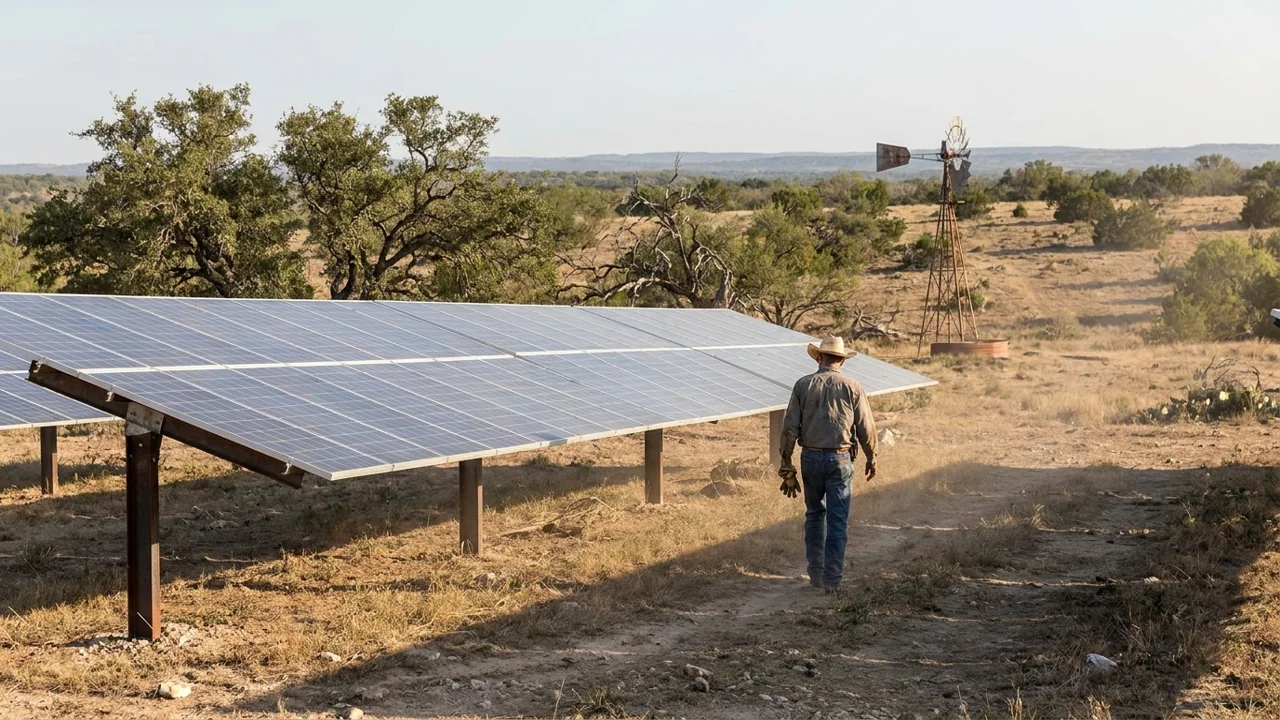
Ground mounts on farms and ranches need racking engineered for local wind loads and hail-tested modules.
Climate and what it means for your equipment
NOAA counted 190 billion-dollar weather disasters in Texas from 1980 to 2024: 126 severe storms (including hail), 16 tropical cyclones, 11 winter storms and 1 freeze (NOAA NCEI). Those numbers translate directly into buying decisions.
Hail. The baseline IEC 61215 hail test fires 25 mm ice balls at 23 m/s; hail-prone sites can specify modules tested with larger ice balls (explanation of the test). In North and Central Texas, ask for the module’s hail test report and check that your homeowner’s policy covers the array. NOAA’s hail overview explains how large hail forms.
Hurricanes and wind. Tropical cyclones are only 16 of the events but account for most of the damage cost in NOAA’s Texas summary. On the Gulf Coast, use racking and roof attachments with engineering for your site’s design wind speed and exposure. If your home is insured through the Texas Windstorm Insurance Association, alterations must meet the association’s building requirements (Insurance Code §2210.251).
Heat. Panels lose output as cells heat up. The Pmax temperature coefficient on the datasheet tells you how much: a module rated −0.30%/°C running 40 °C above the 25 °C test condition delivers about 12% less than its rating. In West and South Texas, a coefficient closer to zero and good airflow under the modules are worth paying for.
Freezes and outages. Eleven winter storms and a freeze made NOAA’s Texas list. If backup power is a goal, a grid-tied system alone will not run during an outage; you need a battery or hybrid inverter designed to island safely.
What to buy in Texas
Modules: look for UL 61730 listing, a published hail test result and a low temperature coefficient. N-type TOPCon and heterojunction modules generally list better coefficients than older PERC designs, but compare datasheets rather than labels.
Inverters and batteries: if your buyback plan pays little for exports, a hybrid inverter with storage lets you use more of your own solar.
Racking: ask for wind-load calculations, especially on the coast and for ground mounts on ranches.
Quantity: large homes, farms and installers can lower cost per watt by buying solar panels by the pallet; the Avolta pallet guide explains how to compare price per watt and plan freight. Businesses can start with commercial solar panels.
Building and electrical permits come from your city or county. Requirements differ widely between cities and unincorporated areas.
Interconnection is handled by the wires utility or your city utility or co-op. Apply before the system operates and wait for permission to operate.
Buyback enrollment is a separate step with your retail electric provider in competitive areas.
HOAs generally cannot prohibit solar devices, although they may regulate placement within limits, such as requiring that roof panels not extend beyond the roofline (Property Code §202.010).
Property tax exemption: file the exemption application with your appraisal district after installation.
Not statewide. Texas law allows, but does not require, utilities and retail electric providers to buy surplus solar power. In competitive areas, you need a retail provider’s buyback plan; city utilities and co-ops set their own rules.
Is there a Texas state tax credit for solar panels?
No. Texas has no personal income tax and no state solar tax credit. Instead, it exempts from property tax the value that a solar system adds to your home, and businesses can take a franchise tax deduction.
Can I still get the 30% federal solar tax credit in Texas?
Not for a home system placed in service after December 31, 2025. The IRS says the Residential Clean Energy Credit is no longer available for such property. Business credits follow different rules, so check with a tax professional.
How much sun does Texas get for solar?
Global Solar Atlas long-term data show about 1,480 kWh per installed kW per year in Houston, about 1,570 in Dallas and about 1,970 in El Paso, among the higher solar resources in the continental United States.
What solar panels are best for Texas hail?
Choose modules with UL 61730 listing and a published hail test result, ideally tested beyond the 25 mm IEC baseline, and confirm your insurance covers the array. Racking should also be engineered for your site’s wind load.