Phone:
(877)-898-5303
Physical address:
One Glenlake Parkway Suite 650 &, 700, Atlanta, Georgia 30328

Phone:
(877)-898-5303
Physical address:
One Glenlake Parkway Suite 650 &, 700, Atlanta, Georgia 30328
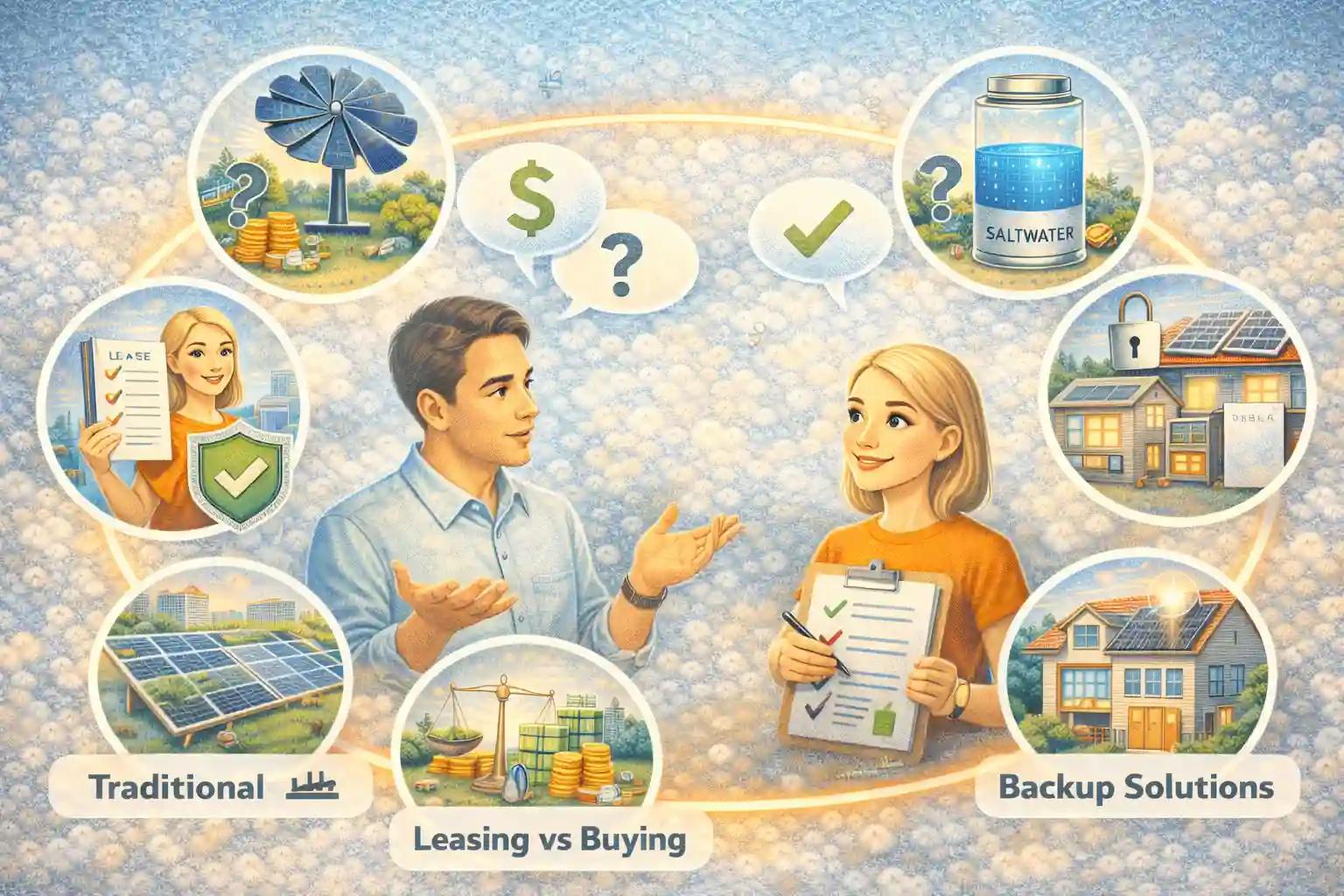
If you’re standing at the crossroads of solar decisions, wondering whether that eye-catching SmartFlower is a smart investment or if “free solar panels” are actually free, A1 SolarStore’s collection of articles has your back. The resources—SmartFlower Solar: Innovative, Sculptural Solar Energy Solution, Global Blackout 2025: Do Solar Panels Work in a Blackout?, Saltwater Batteries: Do They Worth Their Salt, Solar Arrays: Powered by Sunshine, Free Solar Panels: Are They Really Free, Cancelling a Solar Lease Contract: Finding Ways Out, Solar Panel Warranties: Don’t Get Burned, Community Solar: Shared Sunshine, Solar Leasing: Rent the Sun and Solar Tubes: From Dungeon to Daylight—cut through the hype with straight talk about what works, what doesn’t, and what might work for your specific situation.
Let’s talk about the SmartFlower first, because it’s probably the most Instagrammable solar product you’ll ever see. SmartFlower Solar: Innovative, Sculptural Solar Energy Solution doesn’t dance around the central tension: yes, it’s gorgeous with its dual-axis tracking and flower-like design, but you’re paying $10 per watt compared to $3.50 for traditional rooftop panels. That’s nearly triple the cost for a system that covers only 40-60% of average household energy needs and comes with a concerning 5-year warranty on a device with multiple moving parts. If you’re wealthy enough that cost isn’t a primary concern and you genuinely love the design, go for it—but if you’re looking for practical solar economics, traditional panels deliver far better value. Before you commit to any system, Solar Arrays: Powered by Sunshine walks you through how solar arrays work, how they’re sized, and what your roof needs to support them.
When it comes to storing that solar energy, Saltwater Batteries: Do They Worth Their Salt explores an alternative that sounds almost too good to be true: non-toxic, non-flammable batteries that you can fully discharge without damage. The catch? They need about twice the space as lithium-ion batteries and deliver lower energy density. Think of it as choosing between a safer, bulkier option and a compact, established technology with fire risk—neither is perfect, but knowing the trade-offs helps you decide what fits your garage or basement.
Now let’s address those “free solar panels” offers that keep showing up in your mailbox.
Free Solar Panels: Are They Really Free and Solar Leasing: Rent the Sun break down exactly what you’re signing up for: zero upfront cost, sure, but $25,000-$40,000 in payments over 20 years, escalating monthly fees, and zero ownership when the contract ends. You’re essentially renting panels on your roof while someone else pockets the tax credits. For some homeowners who can’t afford upfront costs or don’t plan to stay long-term, leasing might make sense, but most people get better value buying outright or exploring financing options. If you’re already stuck in a lease that isn’t working out,
Cancelling a Solar Lease Contract: Finding Ways Out maps your exit strategies, from cooling-off periods to buyout negotiations and transfer complications when selling your home.
Protection matters just as much as the system you choose. Solar Panel Warranties: Don’t Get Burned untangles the confusing world of product warranties, performance guarantees, and workmanship coverage—three different protections that often come from three different companies. You’ll discover why installer stability matters as much as manufacturer reputation and why keeping detailed documentation can save you thousands when something goes wrong. Then there’s the blackout reality check: Global Blackout 2025: Do Solar Panels Work in a Blackout? delivers the uncomfortable truth that your standard grid-tied panels will shut down automatically during power outages, leaving you in the dark despite having panels on your roof. Real backup requires battery systems and hybrid inverters—expect to add $10,000-$15,000 to your budget if blackout protection is a priority.
Not ready to put panels on your roof? Community Solar: Shared Sunshine introduces subscription-based solar participation for renters, homeowners with unsuitable roofs, or anyone preferring lower commitment. You won’t own equipment or eliminate your electric bill entirely, but you’ll support renewable energy and see modest savings without installation hassles. And if you’re interested in solar benefits beyond electricity, Solar Tubes: From Dungeon to Daylight explores passive daylighting that transforms dark interior spaces by channeling natural light through reflective tubes—no photovoltaics required. The bottom line? A1 SolarStore’s content respects your intelligence enough to present both the appeal and the drawbacks of every solar option, helping you make decisions based on your wallet, your property, and your actual energy needs rather than marketing hype.